


.webp)
SEO review by Head of Organic Growth
In one call, get a clear SEO roadmap focused on traffic, sign-ups and qualified leads



Growing a SaaS product is a long game — and the competition is tough. In this game, every company has to decide where to place its bets: cold outreach, paid ads, partnerships, social media, SEO content marketing — or a mix of several channels at once.
In the short term, especially with a limited budget, most of these channels can deliver solid ROI. But as the business scales, some of them start to lose efficiency — while others compound and keep working over time.
In this article, we’ll focus on SEO-driven SaaS content marketing. It’s a channel that often feels slow and expensive at the beginning, but in the long run it can become one of the most reliable growth channels — and a steady source of qualified leads.
We’ll start by breaking down what makes SaaS marketing different. Then we’ll look at how SEO and content marketing work specifically for SaaS. From there, we’ll walk you through a step-by-step framework for building a SaaS content strategy.
Finally, we’ll cover 26 proven content-led growth strategies and talk about what it actually takes to execute them — from costs and resources to the results you can expect if you approach SEO systematically.
Marketing a B2B SaaS or IT product? Want SEO to become a predictable, scalable growth channel — not just traffic? Let’s do this together. We’ll design a search-led content strategy and help your SaaS rank at the top of Google across the US, Canada, Europe, Latin America, Asia, and the Middle East.




SaaS Content Marketing Definition
Imagine you’re shopping for a new pair of sneakers. One pair immediately catches your eye — they just look great. You try them on, take a few steps in front of the mirror, feel how they bounce when you walk. They’re so springy and comfortable! You nod to the salesperson: “I’ll take these.”
Sneakers are a physical product. You can see them, touch them, test how they feel — and make a buying decision based on that experience.
A SaaS product is different. It’s software you access through a subscription — a budgeting app, a design tool, a marketing platform. It lives online. You can’t hold it or try it on — all you have is information.
That’s the core of content marketing for SaaS companies.
A SaaS company has to explain its product — clearly, repeatedly, and across different formats and channels. What the product does. What problems it solves. Why it’s better than alternatives. And why it’s worth paying for.
In other words, SaaS content marketing is a growth strategy built on creating valuable, original content to attract, engage, and retain users.
Here are a few SaaS companies that do this especially well:
- Ahrefs, an SEO analytics platform. Ahrefs runs one of the most respected educational blogs in the SEO space. Their content focuses on in-depth research, practical guides, and real-world case studies. They don’t rely on paid ads or heavy conference marketing — their primary growth channel is content. And it works: their revenue per employee is around $800,000, a figure often compared to companies like Facebook.
- HubSpot, a marketing automation and CRM platform. Instead of pushing hard sales, HubSpot focuses on teaching. They publish tons of helpful articles, templates, and tools (Website Grader is a classic hit!) and even run HubSpot Academy. They position themselves as the go-to source for marketing and sales knowledge.
- Mailchimp, an email marketing platform. MailChimp’s content stands out because of its brand voice — light, friendly, and slightly playful. They make email marketing feel simple and approachable, which makes people enjoy using their product.
For SaaS, content isn’t just about getting leads. It’s a trust-building mechanism. Through content, users learn, solve real problems, get inspired — and gradually become confident that your product is really worth choosing.
Benefits of SaaS Content Marketing
A smart content strategy is a real game-changer for a SaaS company. It helps build brand awareness, build trust, attract and retain customers, and drive sustainable organic growths — all without constantly spending on ads.
Let’s break down key benefits of content marketing for SaaS:
- Boost brand awareness. Content gives your SaaS product a strong presence in the market. Every blog article, guide, tutorial video, or expert interview builds your reputation as a thought leader. It proves that you’re not just selling software — you really know the space and share real value.
- Attracts new leads. In SaaS, content works like a magnet. Helpful resources like guides, templates, checklists, or webinars draw people in, and in exchange for that value, they share their contact info. These leads convert better, because they’ve already seen your solution and your expertise in action.
- Increase customer retention. Retention is critical in SaaS because customers subscribe rather than make a one-time purchase. Content helps them get more out of your product and see results faster — which makes them more likely to renew.
- Boost SEO and organic traffic. Each piece of content — if it’s optimized for the right keywords — can become a new entry point for visitors. Traffic grows cumulatively, and over time, all your guides, case studies, and white-papers will turn into lead-generating assets.
- Expand across languages and markets. If your SaaS operates in multiple countries, you can adapt content for local search terms. This can increase content production costs by 1.5–2x, but it often drives a 2x or more increase in organic traffic and conversions in the target languages.
- Optimize marketing spend. Content is a long-term investment. One article can be updated, repurposed, and distributed across multiple channels. Unlike ads, it keeps working on its own, reducing customer acquisition costs (CAC) over time.
One last big benefit to mention is thought leadership.
Content marketing isn’t just about writing articles optimized for keywords — it’s about building your reputation as an expert and leader in your field. It’s about showing deep knowledge, building trust, and guiding your community.
A brand that demonstrates thought leadership stands out from competitors, earns trust, and builds loyalty. LinkedIn research on B2B companies shows just how powerful this is:
- 75% of executives and decision makers say they’re willing to consider a solution recommended by a thought leader, even if they hadn’t considered it before.
- 9 out of 10 report being more open to marketing campaigns and direct sales from thought-leading brands.
So, beyond boosting traffic and leads, content marketing for SaaS helps your brand get noticed, trusted, and respected.
What Makes B2B SaaS Content Marketing Different
Content-led growth looks different in every niche. For a local flower shop, it’s mostly about inspiration — getting a potential customer to walk in and pick a bouquet. For an e-commerce brand, content is a way to pull in traffic and push one-time purchases.
For a SaaS company, it goes further. Content isn’t just a marketing channel — it becomes part of the product itself, and here’s why:
- A SaaS product isn’t a thing — it’s an experience. You can’t touch it or try it on. The only way to show how it works, what problems it solves, and why it’s worth paying for is through content: articles, videos, guides, case studies, and other useful pieces.
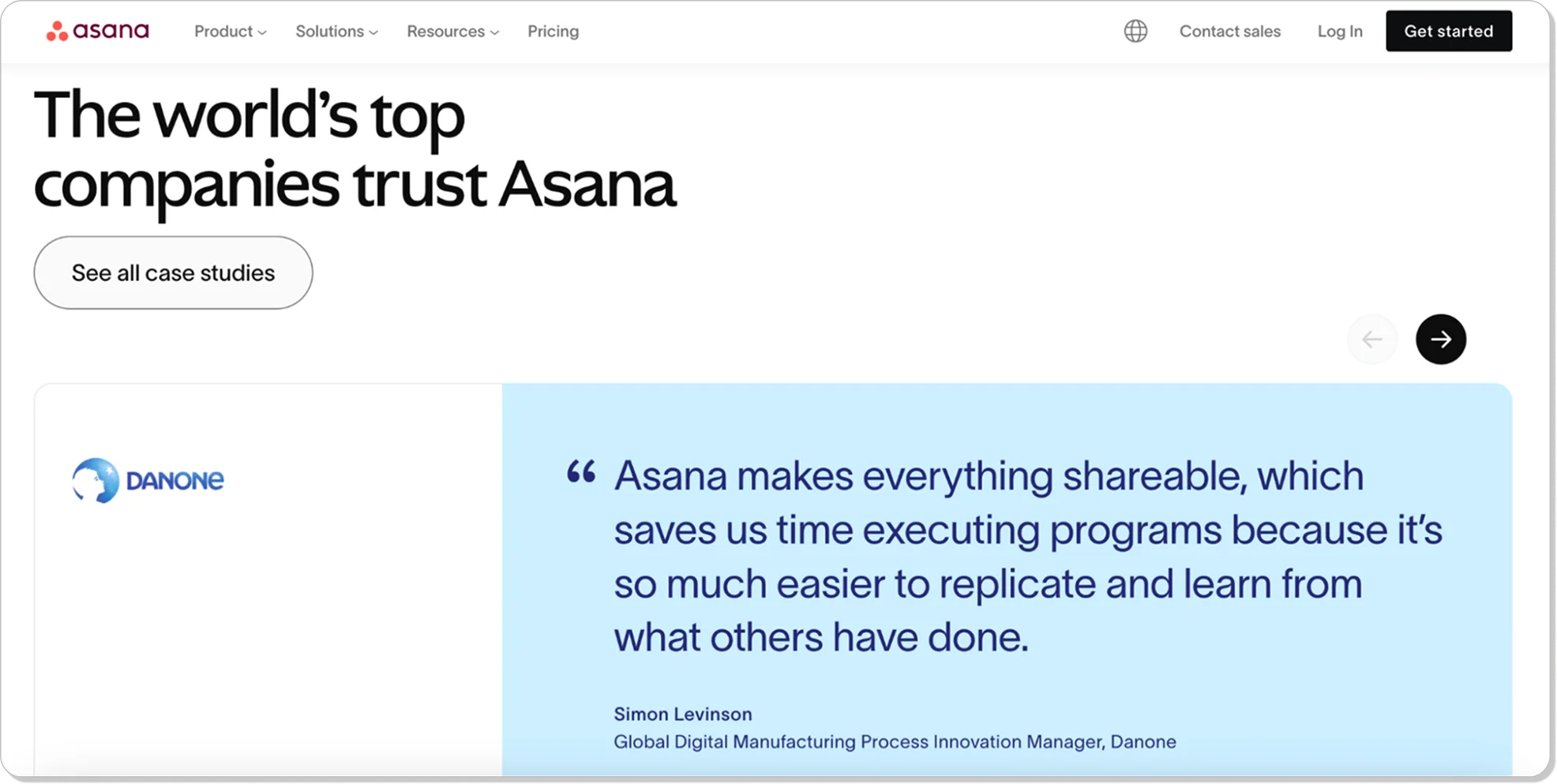
Take Asana, the workflow management platform. On their homepage, they highlight customer stories and quotes that explain how teams use the product and what results they get.
- In SaaS, acquisition is just the beginning. In the traditional software model, content marketing’s main job is to push a customer to make a purchase. In SaaS, content plays a much longer game. It supports users at every stage of their journey: from their first Google search to updating their plan or renewing their subscription.
Some content types are unique to SaaS, like educational webinars, onboarding guides, integration tutorials, or release notes.
- Content is the main driver of leads in SaaS. Most SaaS buyers look for solutions online, which makes content the main engine of growth. High-quality, well-optimized articles bring in users with real intent — and those users are much more likely to convert.
- Content plays a huge role in long decision cycles. B2B SaaS sales take time. Buyers compare alternatives, read reviews, evaluate use cases, and check whether a product fits their business goals before they commit.
That’s where content-led growth comes into play. A strategic library of expert content builds trust, shows how the product works in different scenarios, and nudges prospects toward choosing your solution — long before they talk to sales.
SaaS Marketing Channels Beyond Content
Even though this article focuses on content-driven marketing as the most sustainable growth channel for SaaS in the long run, it’s not the only way to acquire customers. There are plenty of other channels that can work — especially on early stages:
- Offline events. Conferences, trade shows, customer meetups, and in-person sales help build relationships fast and show the product’s value directly.
- Paid channels. Google Ads, LinkedIn, paid social ads, and other forms of advertising can drive leads quickly and are great for testing hypotheses.
- Partnerships. Integrations and affiliate marketing programs allow you to tap into new audiences and expand reach through trusted platforms.
- Outbound and cold sales. These channels help reach people who aren’t actively searching for your solution yet. Typical formats include ABM, LinkedIn outreach, and cold email.
- SMM. YouTube and social platforms help build an audience around the product and strengthen brand trust over time.
- Aggregators and listings. Platforms like Capterra, G2, and GetApp increase visibility and provide social proof through reviews.
The challenge starts when you try to scale, because all these channels are constrained by ROI (return on investment),
They can perform well with a small budget, but as the spend increases, efficiency often drops: lead growth slows down, CAC goes up, and unit economics start to wobble.
In SaaS, a healthy benchmark is an LTV-to-CAC ratio of at least 3:1. Once acquisition costs grow faster than lifetime value, scaling becomes risky.
That’s usually the moment when SaaS teams start looking for more durable, long-term growth engines and shift their focus toward organic acquisition and content-focused marketing.
Which SaaS Companies Should Invest in SEO — and Which Shouldn’t
SEO and content marketing can be powerful growth channels for SaaS — but they are not a silver bullet. They have their limits and competition is the first one you’ll notice.
SaaS SEO is one of the most crowded spaces in search. When you’re trying to rank, you’re not just competing with businesses similar to yours — you’re against different types of players:
- Other SaaS companies. Many of these companies are well funded, operating at scale, and able to invest heavily in content. They publish a lot of content, target whole keyword clusters, push hard on product and comparison queries, and try to cover the entire search demand in the niche.
- Aggregators. Platforms like G2 Crowd, Capterra, Software Advice, and Trustpilot are built specifically to rank for reviews and comparisons. Capturing search traffic is their core business — and they usually do it very well.
- Media outlets and competitor blogs. Product reviews and comparison pieces published by media outlets and industry publications like Forbes, PC Mag, Medium, and niche journals often rank high and pull in a lot of organic traffic.
- UGC platforms. Large communities like Reddit and Quora, where users create content themselves (discussions, reviews, recommendations, how-tos) frequently rank at the top of the SERP and take up a big chunk of the traffic.
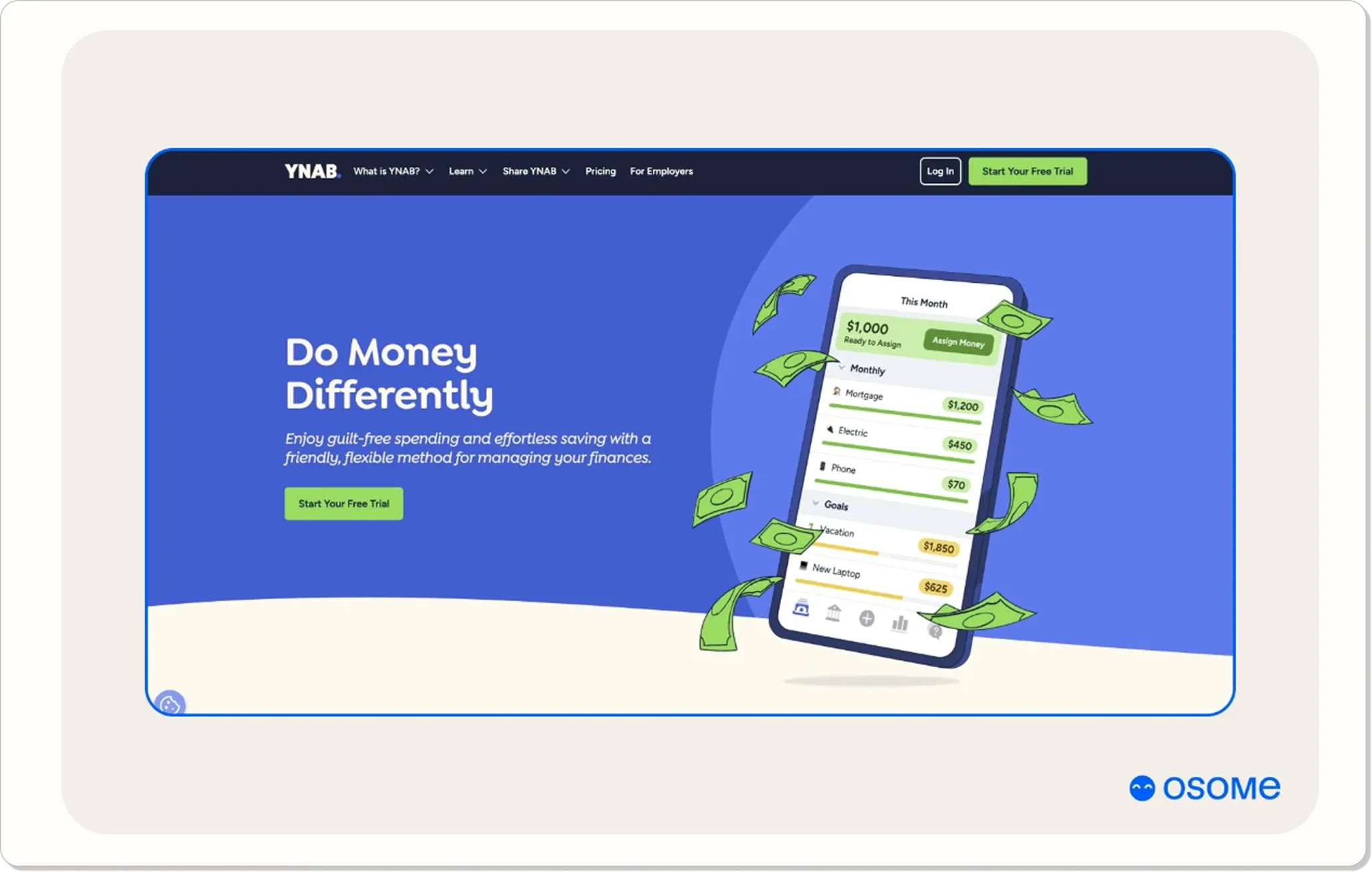
For example, look at the query “Best Project Management Software for Small Teams.” The top results are a mix of competitor pages, an industry article from The Digital Project Manager, and a Reddit thread.
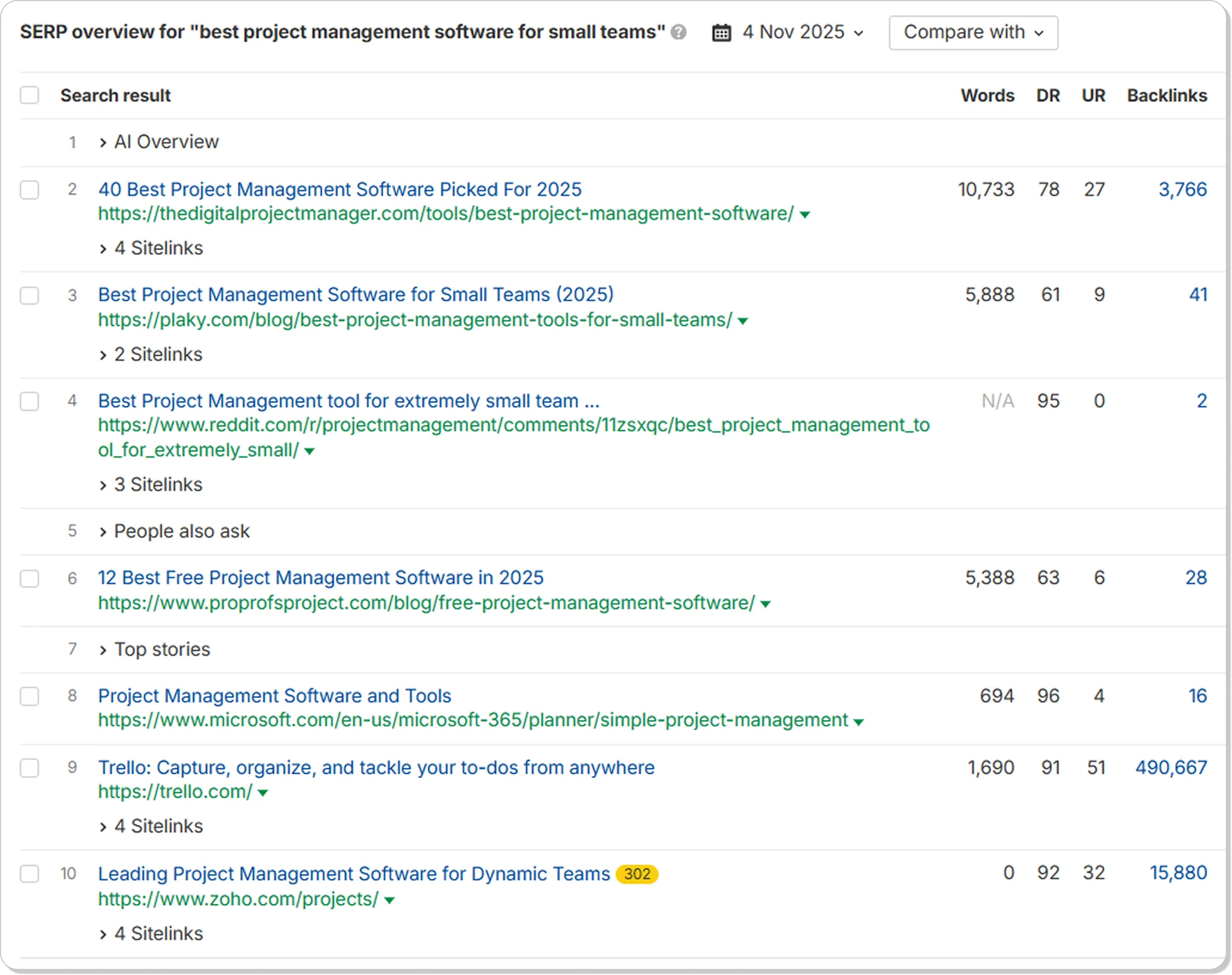
So, if your SaaS site is brand new, you can’t expect to rank organically right away. Google needs a good reason to put you ahead of big publications and strong competitors. But with a smart content strategy, you can start climbing the search results over time.
A good rule of thumb is to target competitive keywords with blog content — guides, tutorials, and reviews, while using product pages to capture lower-competition searches, showcase your product's value, and convert traffic into customers.
There’s no simple answer to whether SEO is a luxury your SEO can skip or a must-have. Like any channel, it takes time, effort, and a clear strategy to get results.
Now, let’s break down which companies should start investing in SEO and which might be better off focusing on other growth channels:
Successful SaaS Blog Examples (B2C, B2B)
Let’s look at some companies that have nailed their content strategy and seen real results.
B2C-SaaS: Examples of high-performing blogs
For B2C SaaS, content marketing is all about attracting users and building brand awareness. The niche leaders who consistently publish high-quality, expert content manage to grow organically — even in highly competitive markets:
- Canva — 839 articles. Their blog covers a wide range of topics, from design and branding to marketing. The main goal of their content is to inspire users to create visuals using their product.

- Webflow — 934 articles. Webflow’s blog covers everything related to the company’s speciality — building websites without coding. They write about web design, animation, no-code development, UX, project management, and more. Webflow’s content educates, guides, and at the same time shows how easy it is to create sites within the Webflow ecosystem.

B2B-SaaS: Examples of high-performing blogs
In B2B SaaS, a blog is a way to prove expertise and move prospects through the funnel. With consistent publishing and a strong editorial approach, these companies generate steady organic traffic:
- Shopify — 2529 articles. Shopify’s blog covers the full eCommerce journey, from launching an online store to marketing, operations, and sales growth. At this point, it’s more than a blog — it’s a full scale education hub for entrepreneurs and growing businesses.

- Salesforce — 2258 articles. Salesforce’s blog focuses on analytics, CRM strategy, and customer data management. It reinforces the company’s position as a thought leader and helps it stay at the center of industry.

At this point, we’ve hopefully managed to persuade you that SEO-driven content marketing is a reliable way to attract traffic, generate leads, and win customers. Now it’s time to get practical.
In the next sections, we’ll break down how the content marketing funnel works, and walk you through, step by step, how to build an effective SaaS content strategy.
Content Marketing Funnel: ToFu–MoFu–BoFu!
Imagine you’re speaking at a public event. At first, you cover broad, popular topics. Lots of people are listening — some of them are really interested in what you’re saying, while others are just curious.
Then you start going deeper into your niche, and some people drop off. But the others who stay are fully engaged: they listen closely, ask smart questions and want to continue the conversation after your public talk.
This is essentially how the funnel works. It represents the flow of people who interact with your content online: a wide audience at the top, more qualified prospects in the middle, and — at the bottom — those who will choose your SaaS product and stick with it over time.
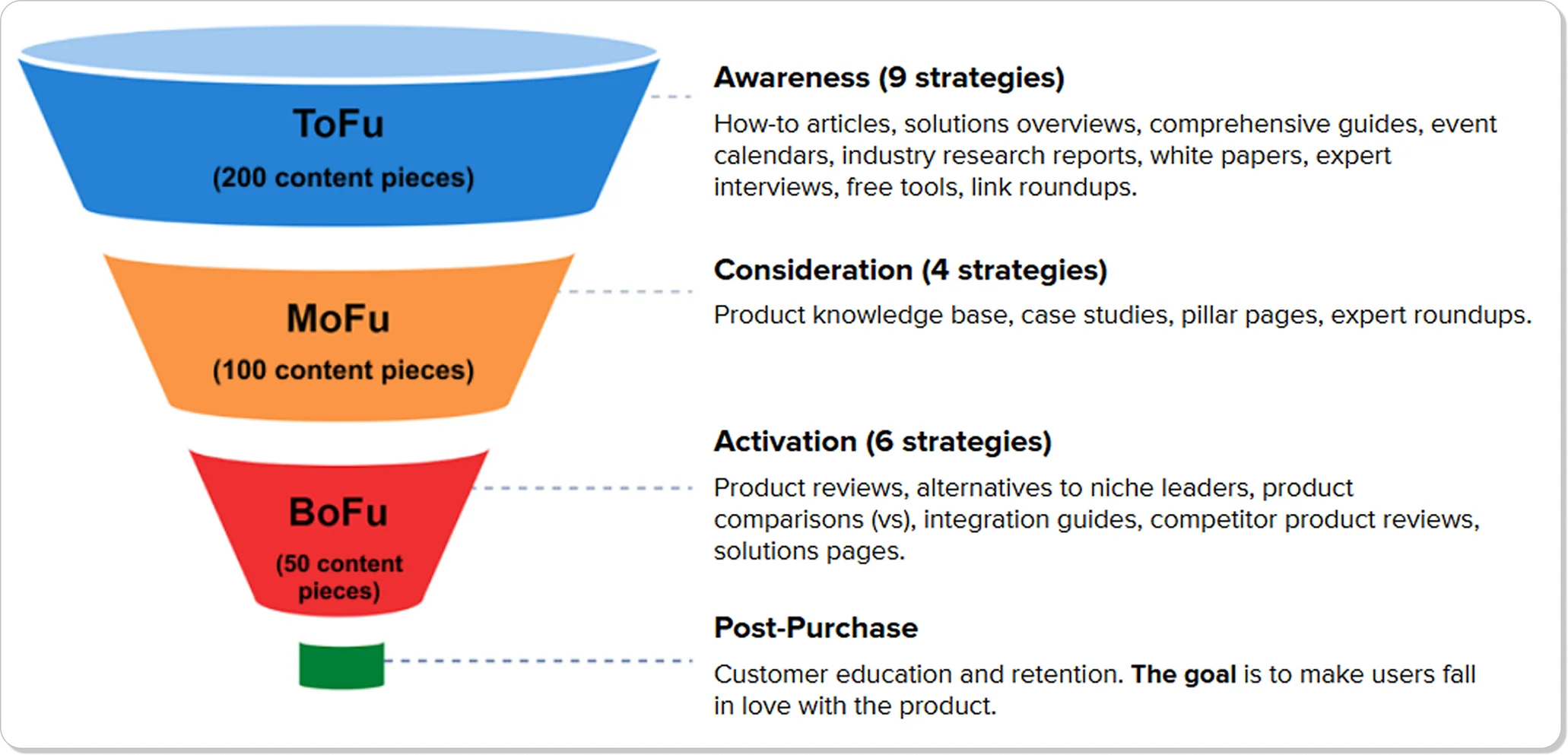
The idea behind the funnel is simple: people at different stages are interested in different types of content, depending on how familiar they are with the problem you solve and the product you offer:
- ToFu (Top of Funnel). This is where people are just starting to realize they have a problem your product can solve. They’re not ready to buy yet — they’re researching, reading, and trying to understand what their options are.
The goal of ToFu content is to get attention and bring in traffic. You want as many relevant people as possible to discover your content and start associating your brand with the problem they’re trying to solve.
Typical ToFu content includes how-to instructions, pain-point-focused articles, guides, research papers, expert interviews, white papers, and similar educational pieces.
- MoFu (Middle of Funnel). At this stage, people know what their problem is and are actively looking for solutions. They are already comparing tools and platforms, but they haven’t made a decision yet.
MoFu content should highlight the value of your product. It helps readers understand the benefits, see how your product works, and start trusting you as an expert in the space.
Common MoFu formats are case studies, expert roundups, and knowledge base articles.
- BoFu (Bottom of Funnel). At this stage, people know they need a product like yours. They are comparing alternatives, digging into details, and getting close to a purchase decision.
The role of BoFu content is to reduce friction and make the choice easier by clearly showing that your SaaS product is the best fit.
Typical BoFu content types include product reviews, competitor comparisons, integration guides, solutions pages, and similar pieces.
- Post-purchase. As we’ve already mentioned, content-led marketing for SaaS doesn’t stop once a client signs up. Most of the value comes later, when users keep paying and keep using the product.
At this stage, content is all about engagement and retention. The goal is to help customers use your product effectively, get results faster, and see ongoing value, so cancelling their subscription never crosses their mind.
Types of content here include onboarding guides, tutorials, educational videos, solution roundups, customer success stories, and product update emails.
Overall, the content funnel helps guide people from first interest to long-term loyalty using the right content at the right moment.
Next, we’ll break down specific content strategies for each funnel stage. But first let’s look at how to build a content strategy for your B2B SaaS brand, step by step.
How to Build Your Own B2B SaaS Content Strategy
Content marketing is still about marketing — not just publishing articles because you “need a blog”. The goal is business growth: more organic traffic, more leads, more sign-ups, and more conversions.
That’s why a content marketing strategy for SaaS companies doesn’t start with brainstorming random blog topics — it starts with research. You need to have a clear understanding of the market, the audience, and the product itself.
Most importantly, you need to know which business goals content is meant to support and what results it should drive at each stage of the funnel — from first touchpoint to long-term customer retention.
Below is the step-by-step SaaS SEO content strategy framework that we use when working on client projects:
Step 1: Understand the product and the competitors
First, we go deep into the product and the competitive landscape. We start with a briefing that includes a detailed review of the client’s solution and an analysis of three of their closest competitors.
Most SaaS teams already know who they are competing with. These are usually the products they compare themselves to when building or positioning their product.
At this stage, we also talk to the client to understand their audience and get answers to a few essential questions:
- Who is the customer, and who actually makes the buying decision?
- What industry they are in, and how big is the company?
- What problem or pain point does the product solve?
- Why do customers choose this solution over others?
- What is the key competitive advantage?
Whenever possible, we also test the client’s product and competitor tools ourselves, as well as review case studies, customer stories, and user reviews. The idea is to fully understand the space before writing anything.
Step 2: Identify your real search competitors
Once we understand the product and the audience, the next step is to figure out who you’re actually competing with in search.
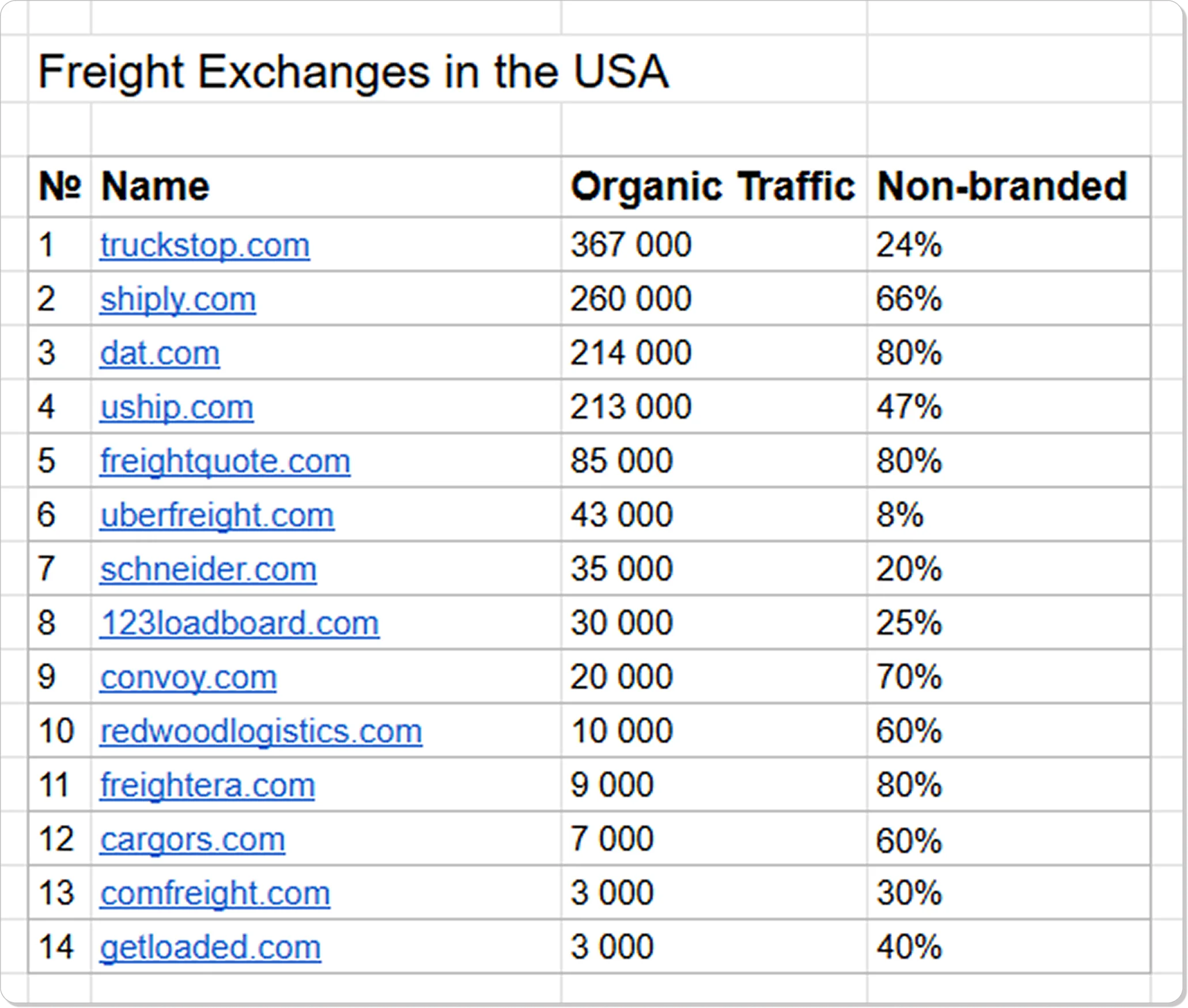
To do that, we put together a core list of target keywords and analyze which sites are ranking for them. These are the players competing with you for the same search demand and the same audience attention.
Along with direct competitors, this list almost always includes industry media and aggregator platforms like G2, Capterra, GetApp, and Software Advice.
In mature SaaS markets, you’ll usually see around 100–150 competing domains. If the market is new or very niche, 10–20 relevant competitors is usually enough to understand how hard it will be to break into the SERPs.
Step 3: Analyse competitors’ traffic structure
At this stage, we use tools like SimilarWeb and Ahrefs to understand the following:
- who gets the most traffic for our key queries
- which page types bring that traffic
- how long competitors have been on the market and how fast they’ve grown over time.
We break competitors’ traffic down in detail: where it comes from, how much of it is branded vs. non-branded, which pages drive the biggest share of visits, etc.
Below is an example from the workforce management software niche. In the Ahrefs screenshot below, you can clearly see which pages pull inorganic traffic and which keywords they rank for. This kind of analysis helps us understand what Google already rewards in the niche — and where there’s room to compete.
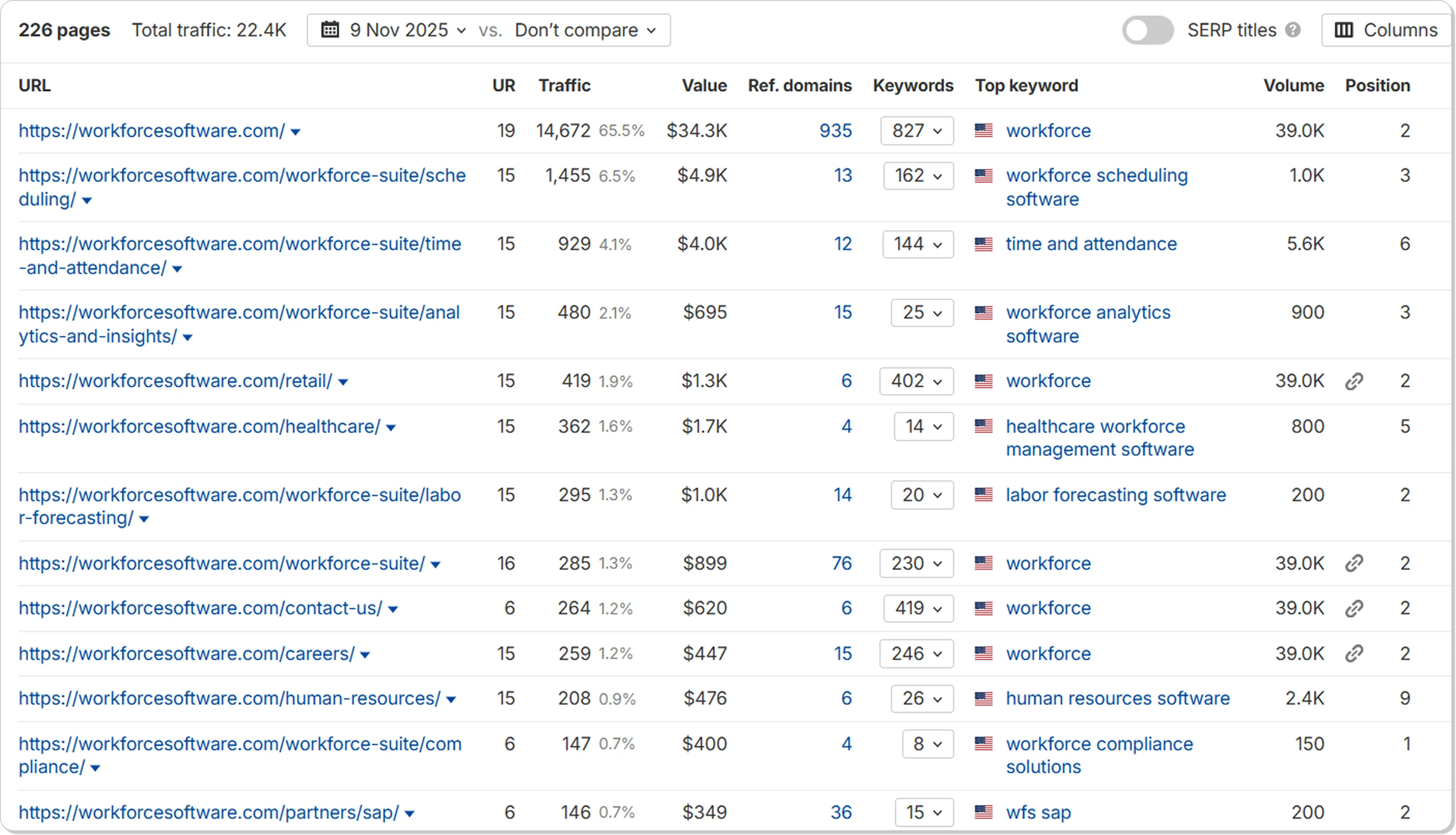
We analyzed the traffic structure of one of the products in the niche and came to the following conclusions:
Step 4: Build the keyword list and validate it with the client
After analyzing competitors’ traffic, we narrow the list down to about 20 key players. Based on them, we put together an initial keyword set that reflects real search demand in the niche.
Next, we validate this keyword list with the client. Together, we review which queries are truly relevant to the product and business goals — and which ones should be excluded.
This step is especially important for SaaS. B2B sales are complex and expensive, and they require experienced teams, time, and focus. If a lead doesn’t match the target audience, it only puts extra strain on the sales team and reduces overall efficiency.
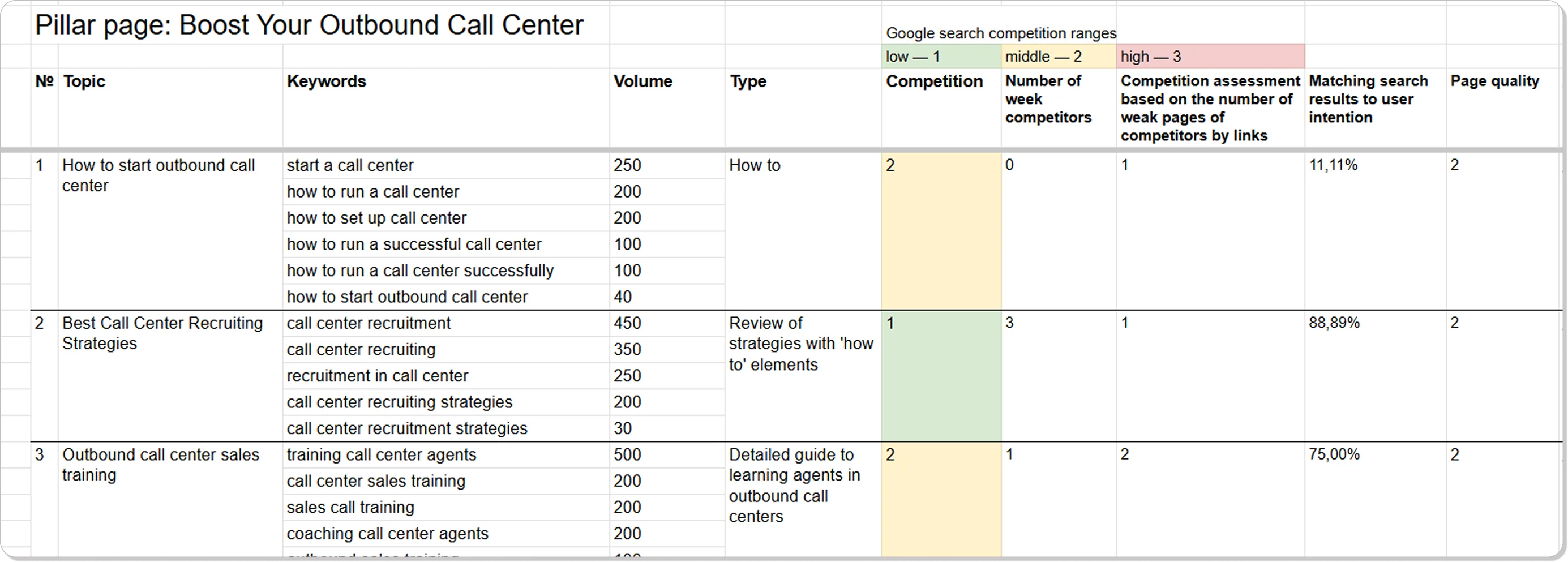
Step 5: Map topics to the funnel (ToFu, MoFu, BoFu) and build a content plan
After that, we turn keywords into content ideas, map them across the funnel stages (ToFu, MoFu, BoFu), and put together a content plan for several iterations ahead. One iteration usually covers 2–3 months, which gives enough time to publish, measure results, and adjust the strategy if needed.
Key Questions Your SaaS Content Strategy Should Answer
Beyond the content plan itself, your B2B SaaS content strategy should clearly cover all the business aspects of SEO-driven growth. In particular, it should answer the following questions:
- How does the SEO strategy align with the overall company strategy? How does it support key business goals: sales growth, customer acquisition, market expansion, brand awareness, etc.
- Which competitive advantages will we leverage? The core of the strategy: which tactics will help us outrank competitors in the SERPs?
- What’s the step-by-step execution plan? Tasks broken down by months, with assigned wonders and success criteria.
- Which pages need to be on the site? Total number, full list of topics, and publishing priorities.
- What resources are required? Which specialists should be added to the team and what skills should they have?
- What budget do we need? How much to allocate for content creation, links, and management over 6, 12, 18, and 36 months.
- What results do we expect? Projected growth in traffic, leads, and sales over 6, 12, 18, and 36 months.
- What are the project KPIs? Which metrics will measure team performance and the strategy’s effectiveness.
Once your SEO strategy is developed, you should have a clear picture of whether it’s worth investing resources to bring it to life.
How to Convert Traffic into Trials and Demos
Before we dive into specific content strategies that drive qualified traffic and leads to your site, let’s touch on another important question: how to turn those interested visitors into actual products users.
For SaaS, the main goal is usually trials and demos. There are a few ways content can guide your audience toward these actions:
- Offer your product as the solution to the client's problem. If someone is looking to solve a specific problem — and your project really does the job — present it directly.
For example, you can publish a how-to guide that shows how your tool makes the task faster or easier — and include a link to a trial or a demo request. - Present your product as a useful extra. Even if the user’s question isn’t exactly about your product, show how it can make their work smoother or faster.
- Build awareness and stay visible. Sometimes content isn’t about immediate conversions — it’s just reminding people that your product exists. Later, when they need a solution, they’ll think of you.
- Guide visitors through the funnel. You can slowly warm up potential users with useful content — email, webinar, white paper, another webinar — and only then connect them with sales.
- Use retargeting. Content helps you collect audience contacts, so you can retarget them later via social ads or Google Ads.
Now let’s get practical. Here are 19 SEO content strategies for SaaS you can use across different stages of the content funnel.
As a bonus, we’ve included 7 advanced methods for companies ready to go beyond the basics and grab a bigger share of traffic in their niche.
BoFu Content: 50 Pieces for Customers Already Searching for Your Product
It’s always best to start creating content at the bottom of the funnel. That’s where the hottest leads are. These people are actively looking for a solution and ready to buy.
So the first step is to cover all BoFu (bottom of funnel) topics with content directly tied to your product. Usually, that’s about 50 pieces of content you want to publish right after launch.
Let’s break down the types of BoFu content a SaaS company should create to capture the hottest traffic:
Strategy 1: Product Reviews Optimized for High-intent, Long-tail Searches
Demo and free trial conversion rate: 2-7%
When a potential customer searches for a solution to their problem, they naturally consider multiple product options. Even if your product shines on your website, most buyers will check out other top solutions before making a purchase.
Think ahead: create a review of leading products in your niche and feature your product at the top 😉
In practice, this means publishing comprehensive, objective, expert reviews of competing solutions or alternatives that address the same problem — and giving your SaaS solution maximum visibility.
Key benefits of this approach:
- Capture commercial-intent traffic. People searching for queries like ‘[competitor] review’ are actively evaluating options and have a high potential to convert. In other words, they are ready to buy, and you want them evaluating those options in your environment — not competitor’s.
- Increase the page’s relevance for search. А detailed comparison of several products signals to Google that your page is more complete and relevant than single-product overviews.
- Build authority and trust. An open, unbiased comparison highlights your expertise and demonstrates that you’re deeply familiar with the market, aware of the common pitfalls, and tuned into your customer’s needs.
- Showcase your product strategically. Within the review, you can highlight your SaaS-product’s unique strengths and emphasize what sets it apart from the competition.
For example, Zendesk’s review of live chat software places its own solution first and gives a structured overview of its advantages while also noting minor drawbacks.

To create a review that’s useful for readers and drives qualified traffic and leads, follow these steps:
- Run keyword analysis. Focus on commercial-intent queries like “[competitor] review”, “[competitor] vs”, “[competitor] alternatives”, etc. Use tools like Ahrefs, SemRush, or similar to evaluate search volume, keyword difficulty, and intent.
- Pick the products for your comparison. Don’t limit yourself to direct competitors — also consider alternatives that address the same pain points. Focus on the most commonly searched solutions. To give your content authority, include a range of options: from industry leaders to niche offerings with unique capabilities.
- Create a comprehensive and well-structured review. Stay objective, but plan how to present your SaaS-product in the best light through text highlights, illustrative media (screenshots, video demos, etc.), or other creative assets.
Here’re typical elements of a SaaS product review:
- Overview of products in the niche. Provide a clear snapshot of each product: what it does, the problem it addresses and how it functions. For example, answer questions like “What is live chat software?” and “How does live chat software work?”
- Comparison table. Create a comparison chart with all key attributes like pricing, core features, free trial options, etc. Rank products according to these factors and identify top performers.
- Detailed product breakdowns. Provide an in-depth review for each solution, highlighting its unique strengths, key features, use cases, and any limitations.
- Decision guidance. Wrap up with actionable recommendations, tips for choosing the right software, and frequently asked questions.
Examples of SaaS product reviews:
Finally, a few pro tips for creating authoritative reviews:
- Use transparent ranking criteria. Explain your ranking process: outline how products were picked and scored. This will increase trust.
- Highlight author expertise. Share the author's background and hands-on experience in the space to show that readers can trust their opinion.
- Structure your content clearly. Break information into sections with tables, screenshots and video demos. This will make the article easier to read and more engaging.
Strategy 2. Alternatives to the Niche Leaders
In every niche, there’re usually four or five well-known market leaders — the tools everyone has heard of. These brands typically have strong reputation and search visibility, so trying to outrank them head-on can be tough.
The idea behind this SaaS content marketing strategy is to publish a thorough review of the market leader’s top competitors and highlight your own solution as the most compelling alternative.
A smart way to do this is to showcase scenarios where your solution delivers more value than the category leader. In their article, “The 16 best alternatives to DocuSign in 2025”, the Juro team recognizes DocuSign as the leader, but notes that it may not suit every business.

To implement this approach successfully, follow the same steps as in the previous content strategy:
- Identify the most relevant alternatives. Use tools like SemRush and Ahrefs to analyze search demand. Look for queries like “[market leader] alternatives” and related searches to build a curated list of competitors to feature.
- Create a detailed, structured comparison. Provide an in-depth review of each alternative: add screenshots, feature-comparison tables, user reviews, and a detailed analysis of pricing and subscription plans.
An article covering alternatives to a market leader typically includes the following sections:
- Overview of the market leader — how its product addresses user needs and in which cases alternative SaaS solutions should be considered.
- Alternative SaaS solutions — other solid products in the niche, the problems they solve, where they beat the leader, and where they fall short.
- Detailed analysis of each alternative — key strengths, interface highlights, how it differs from the leader, pricing comparison, and user feedback.
- How to decide — final takeaways, actionable recommendations, and answers to frequently asked questions.
Examples of high-performing alternatives pages in B2B-SaaS:
To wrap up, let’s look at a few tactics to get the most out of this SaaS content marketing strategy:
- Create a dedicated section for “alternative-to” articles. In almost every niche, you can start by publishing 20-30 content pieces covering alternatives to your direct and indirect competitors.
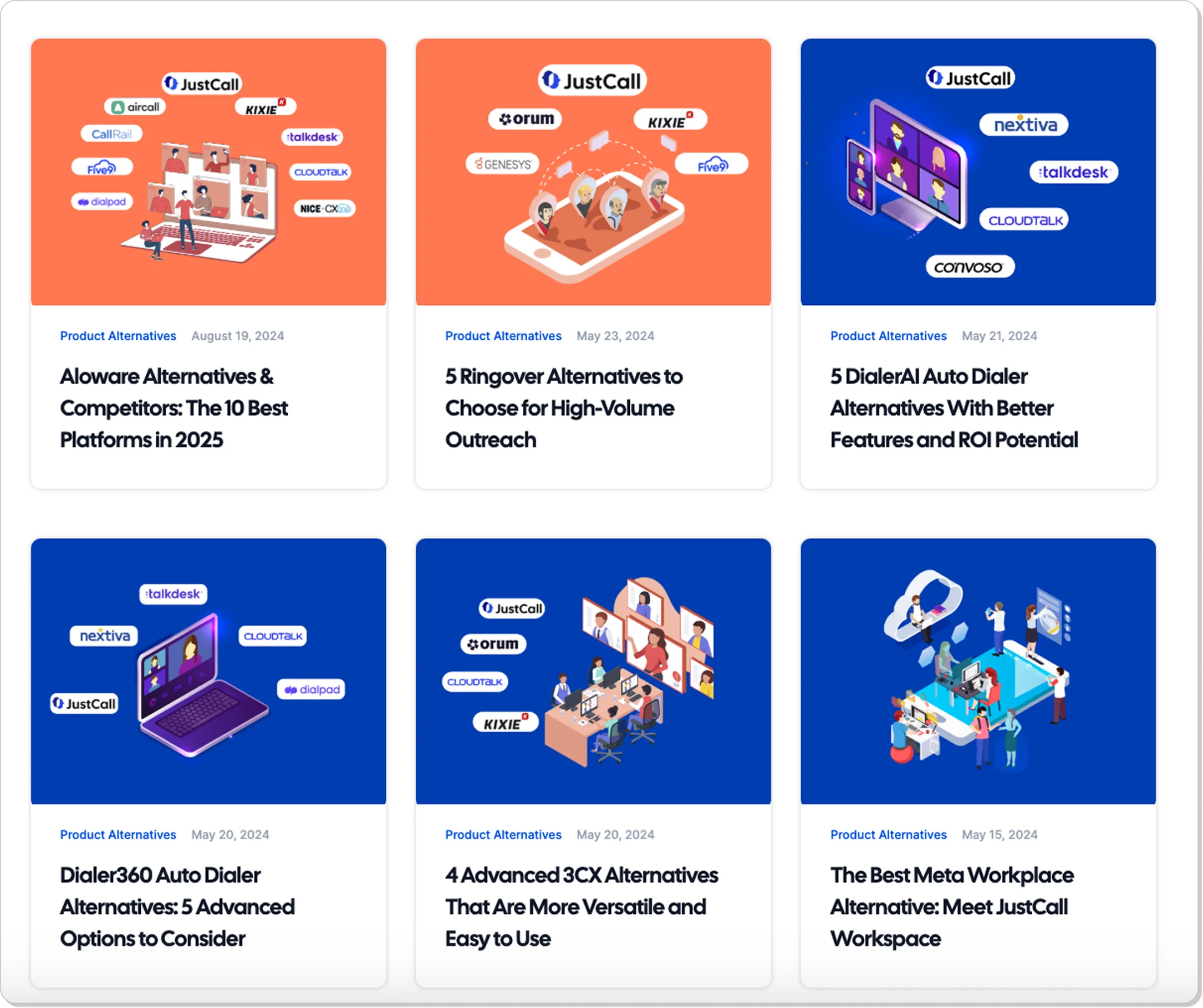
Check out how the JustCall team grouped their alternative-product pages into a separate hub:
- Highlight the leader’s weaknesses. If a potential customer is checking alternative solutions, it usually means that the market leader isn’t meeting their needs. This is your chance to show where the competitor falls short and your solution excels.
- Take every chance to showcase your solution. It’s not always necessary to directly compare your SaaS product against industry leaders — or even include it in the alternatives list. Sometimes, all you need is to mention it naturally in the right moment to help users discover it.
Strategy 3. Product Comparisons (VS)
Previous two strategies focused on market overviews and alternatives; this one zeroes in on a direct comparison between your SaaS product and its competitors.
The core of this approach is to attract high-intent users — those who already know your product and are evaluating it against competitors. This is the perfect moment to show what makes your SaaS solution stand out.
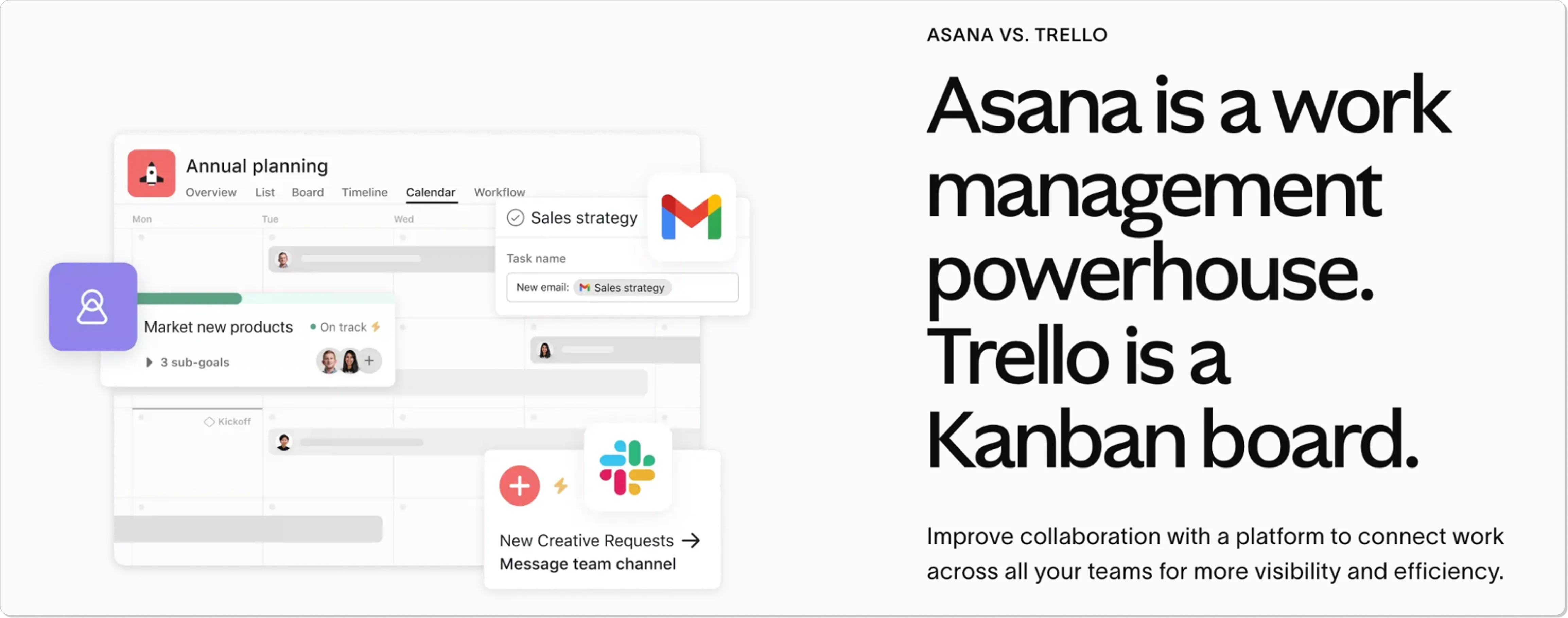
As part of this content strategy, you should create an article — or a series of articles — that honestly and transparently compares your SaaS product with competitors. Follow these steps:
- List competitor products. Enter “[your product] vs” in Ahrefs or another SEO tool to get a list of all solutions that show up next to yours in search results.
- Select competitors for comparison. Look into the pros and cons of each competitor to identify where your product stands out — be it UI, speed, efficiency, or cost. Make sure your comparisons are honest and transparent, and pick opponents you can confidently beat!
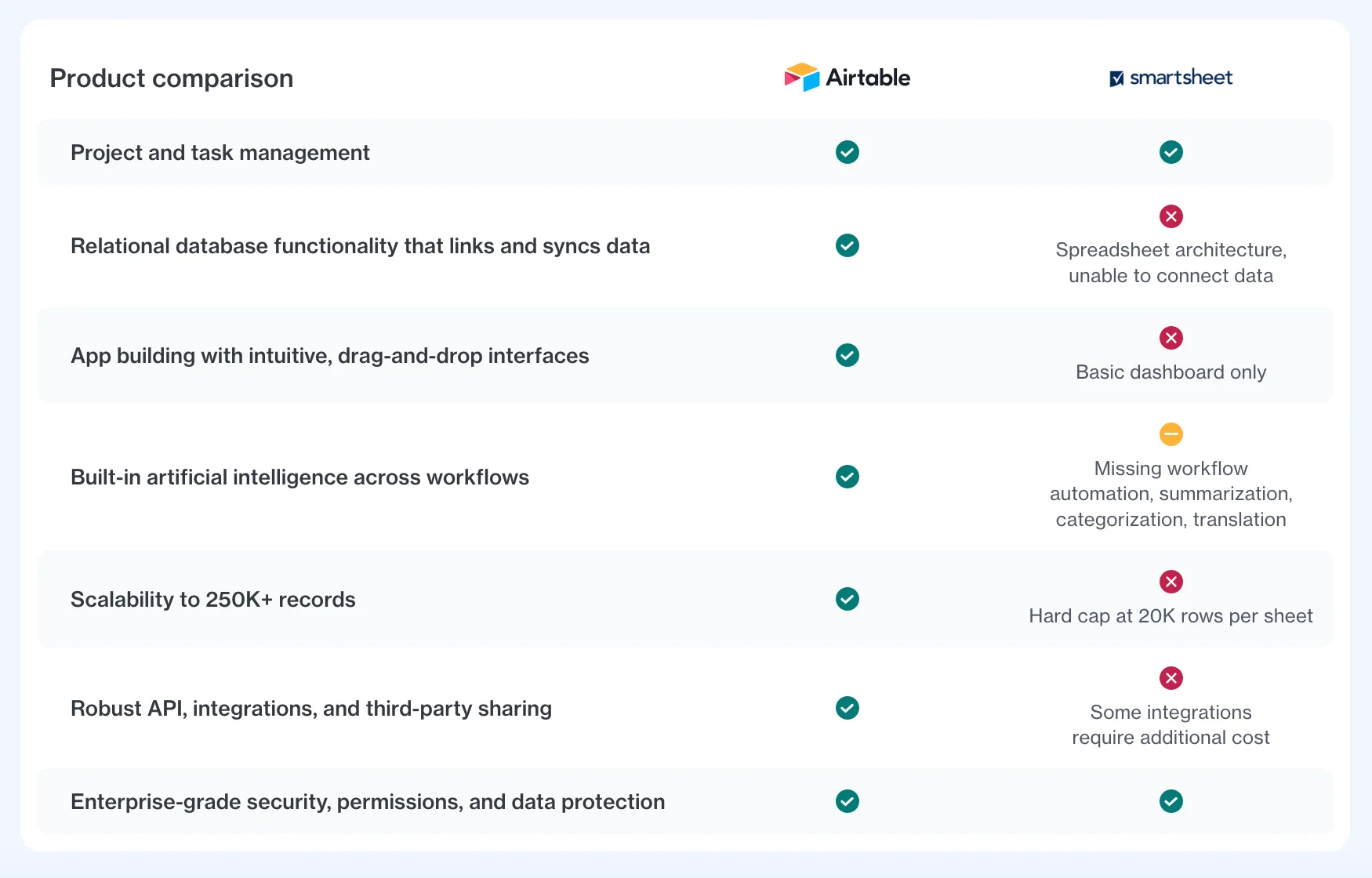
- Create a clear and easy-to-understand comparison. Outline each competitor and the parameters you will use to judge them. Explain why these metrics define the real value of a solution. Display the results in a table or infographic so the insights are immediately clear.
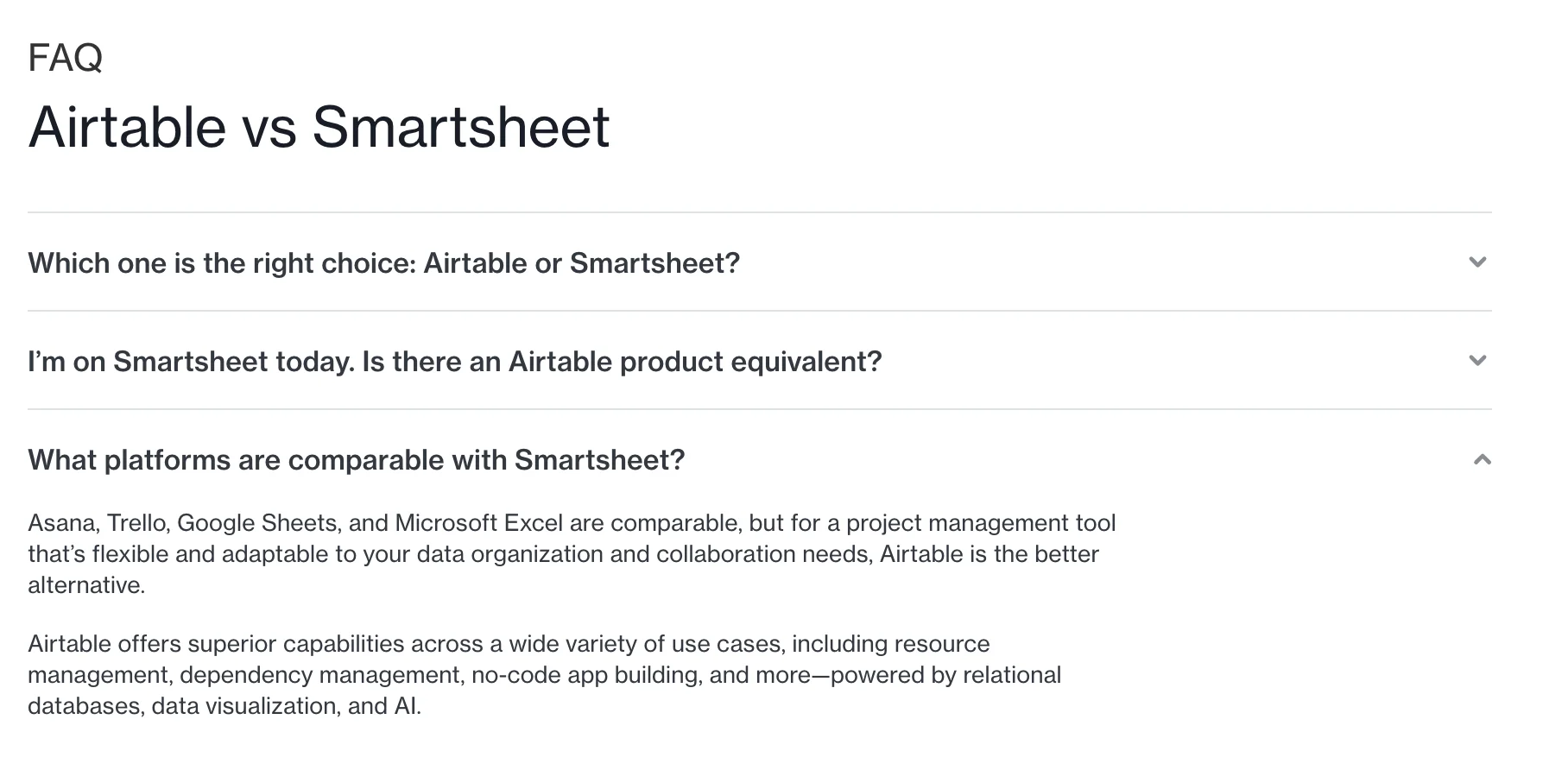
For example, this Airtable’s comparison with SmartSheet uses criteria that make Airtable stand out as the top choice:
What typically goes into a comparison article? There’s no single formula — it depends on the features and areas where you outperform your competitor. Here’s a sample set of sections you could include:
- Overview of each solution. Explain what each product does, its strengths and weaknesses, how they compare, and why choosing between them may be tricky.
- Comparison criteria and methodology. Outline the parameters you use to evaluate the products and why these factors matter.
- In-depth comparison by each parameter. Break down how each solution performs across each parameter. Support the content with a comparison table or visuals.
- Customer reviews. Since the comparison lives on your own site, you can spotlight strong testimonials and ratings to give your SaaS product an extra edge.
- Frequently asked questions. Use this section to address niche or long-tail queries and cover the common questions people have when evaluating these two products side by side.
- Takeaways and conclusion. Sum up the results, highlight which product comes out on top and explain why.
Examples of comparison articles (VS) in B2B-SaaS:
A couple more details will help you make this strategy work smoothly.
- Don’t compare more than three competitors. The most effective format is a simple one-on-one comparison — it keeps the narrative sharp and helps the reader keep focus on both products. Three-way comparisons are possible when products are similar in functionality, though the clarity may suffer.
- Use the change to spotlight your SaaS product. If people aren’t searching for your solution yet (meaning the “[product] vs” query has zero search volume) you can still benefit from publishing a comparison of competitors on your website — just weave in mentions of your product wherever it feels appropriate. This way you capture a share of relevant traffic and introduce your solution to interested readers.
Strategy 4. Integration Guides
B2B SaaS products often exist within a broader ecosystem — or connect with other tools. This creates a great change to drive traffic through educational content and how-to guides.
The idea behind this content strategy is simple: publish a guide showing how to integrate your product with another solution — assuming this integration exists, of course.

To create a high-impact guide that both helps users set up integration and drives traffic to your site, follow these steps:
1. Make a list of queries. Use tools like Ahrefs to identify search terms related to integrations — for example, “[product name] integration”.
2. Explain the value of a specific integration. Open an article by explaining why it may be inconvenient to switch between separate tools, and showing the benefits of connecting the two solutions:

3. Write a clear step-by-step integration guide. The key to this strategy is to give a reader a thorough step-by-step walkthrough of the integration process. Add screenshots and videos so users can follow along without any special technical skills.
Examples of integration guides in B2B-SaaS:
The most important thing in this content marketing strategy for SaaS is to make the integration process crystal clear to the user. Use intuitive visuals to guide the step by step, and at the end, show how the tool looks once the integration is successfully set up.
Strategy 5. Competitor Product Reviews
The idea behind this strategy is simple — take a competitor’s solution and create the most useful, unbiased and complete review. This way, you showcase your expertise, while attracting a share of competitor’s traffic.
Your ultimate goal here is to attract users who are researching the competitor — and offer them your product as a strong alternative in relevant scenarios.
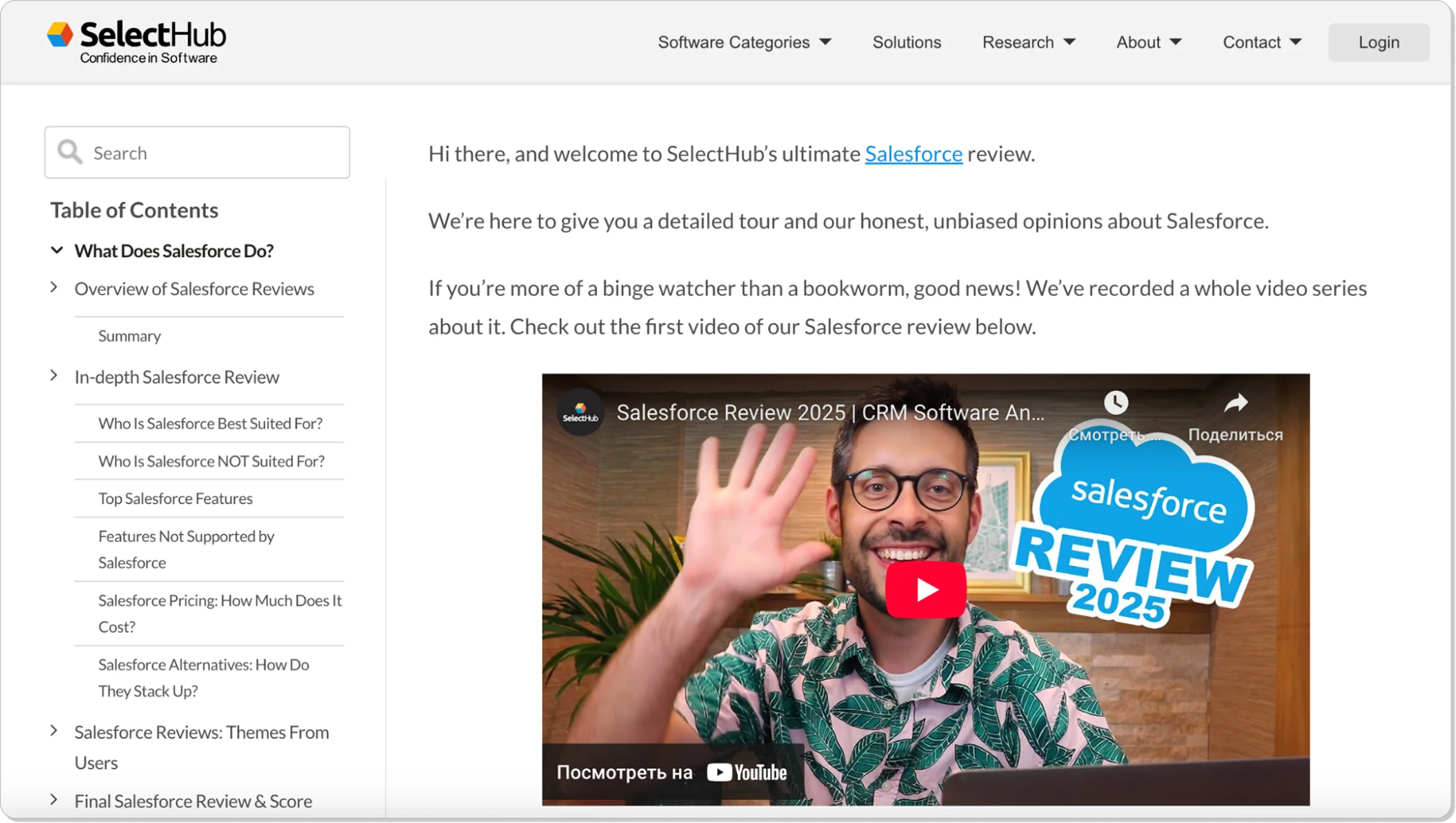
For example, take the in-depth review of Salesforce published on SelectHub, a platform that helps users choose the right software. By publishing this review, the SelectHub team achieves two goals: it captures part of Salesforce’s branded traffic and demonstrates their expertise in evaluating software:
To implement this strategy successfully on your website, follow these steps:
- Choose competitors to review. Use tools like Ahrefs, SemRush or similar platforms. Search for queries such as “[competitor] review”, “[competitor] overview” to build a list of candidates.
- Audit the existing content for target keywords. Review the top 10 pages for each chosen query (for example, “[competitor] review”), and assess the overall quality of these articles — their structure, length, clarity, and content formats.
Identify weak points — lack of screenshots, no pricing information, or outdated information. Use these gaps as cues for what your own review needs to include. - Do hands-on product research. Try the competitor’s product yourself. Go through 3-5 core user scenarios and evaluate how the product performs across key areas like functionality, UX, integrations, support, pricing, etc. Build your review around those insights.
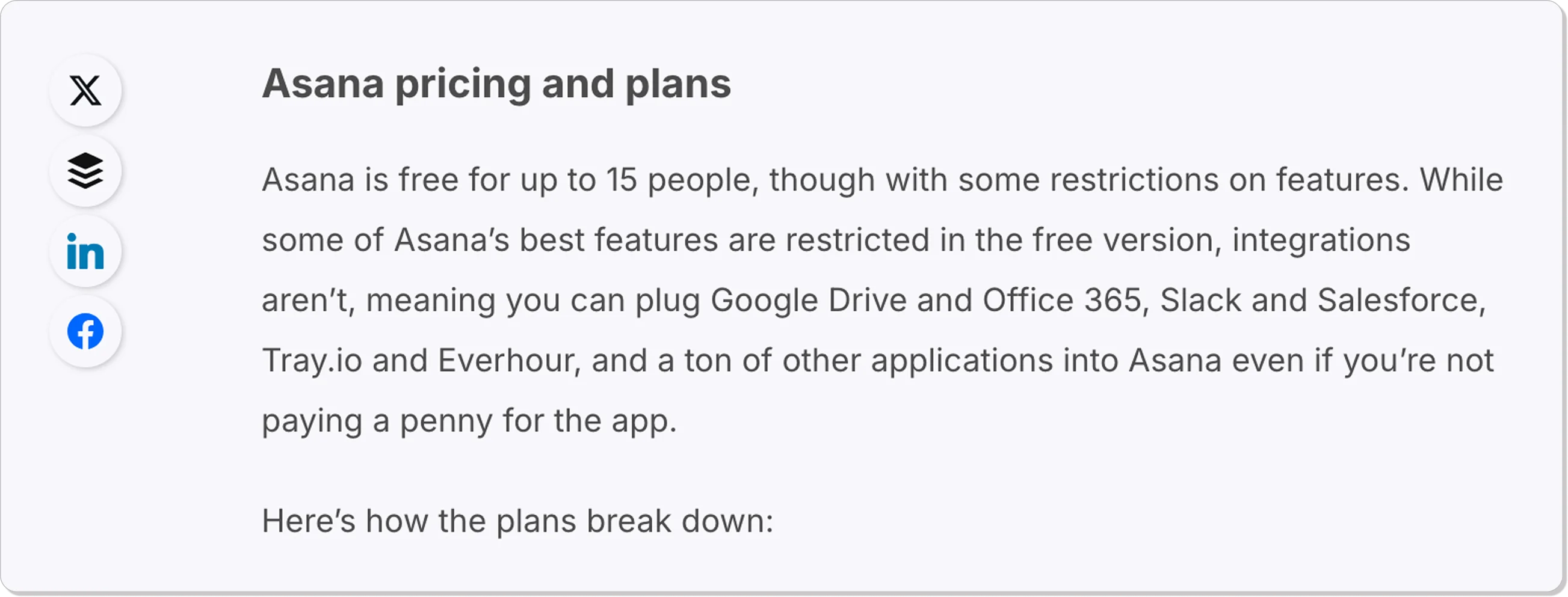
- Pull everything together into a comprehensive review. Bring in your own findings and explore what users say on platforms like G2 and Capterra. Cover the missing pieces you’ve spotted in competitor reviews — that’s what will set your content apart.
When done right, your piece becomes more than just a review — it turns into a go-to resource that both users and search engines trust. This puts your site in front of people who are actively comparing different solutions — and gives you a natural way to introduce your own product along the way.
A few more nuances that help push your competitor review to the top:
- Explain the methodology behind the review. Lay out the criteria you used, why they matter, and what your conclusions are based on — personal hands-on experience, user feedback, independent sources, performance results, etc.
- Highlight your expertise. Add a brief note about your team’s experience with similar tools — it builds trust and shows that your perspective is grounded in real practice and experience rather than impressions.
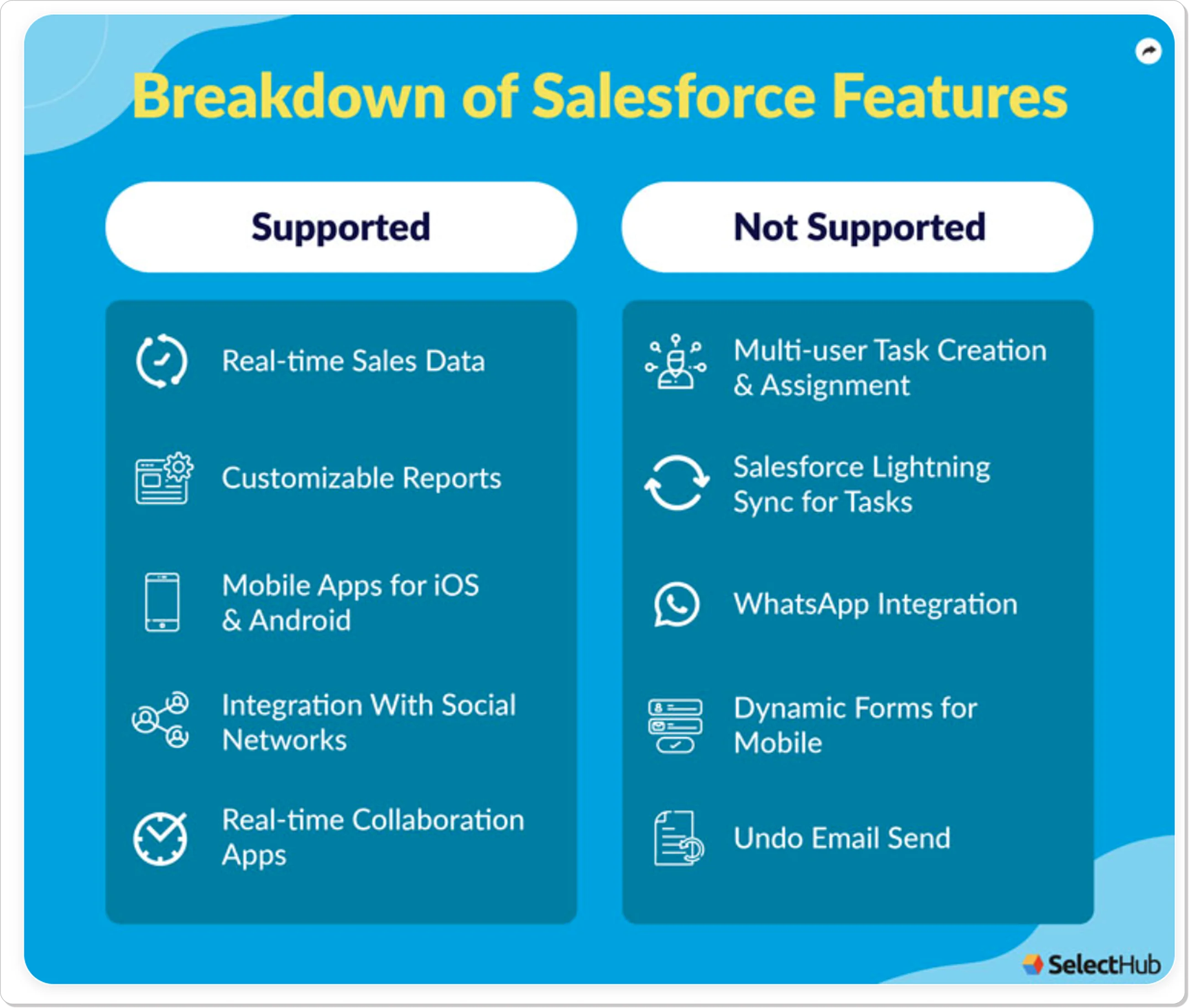
- Show that you actually dove into the product. Keep the tone authentic, don’t use competitors’ marketing language and media. Instead, create your own visuals — tables, charts, and infographics. This will also reinforce trust and credibility.
- Feature your own product. At the end of the review, include a roundup of alternative solutions and highlight the scenarios where each performs best. This is a subtle way to mention your own SaaS product — especially if the main focus of the review is your direct competitor.
Examples of competitor product reviews in B2B-SaaS:
Strategy 6. Solutions Pages
It is quite common for B2B SaaS products when a single solution serves multiple audience segments, each with different goals, pain points, and priorities.
For example, HubSpot offers a unified platform for marketers, sales teams, and support agents — but each group has its own objectives, metrics, and use cases. That’s why HubSpot created separate pages for each segment.
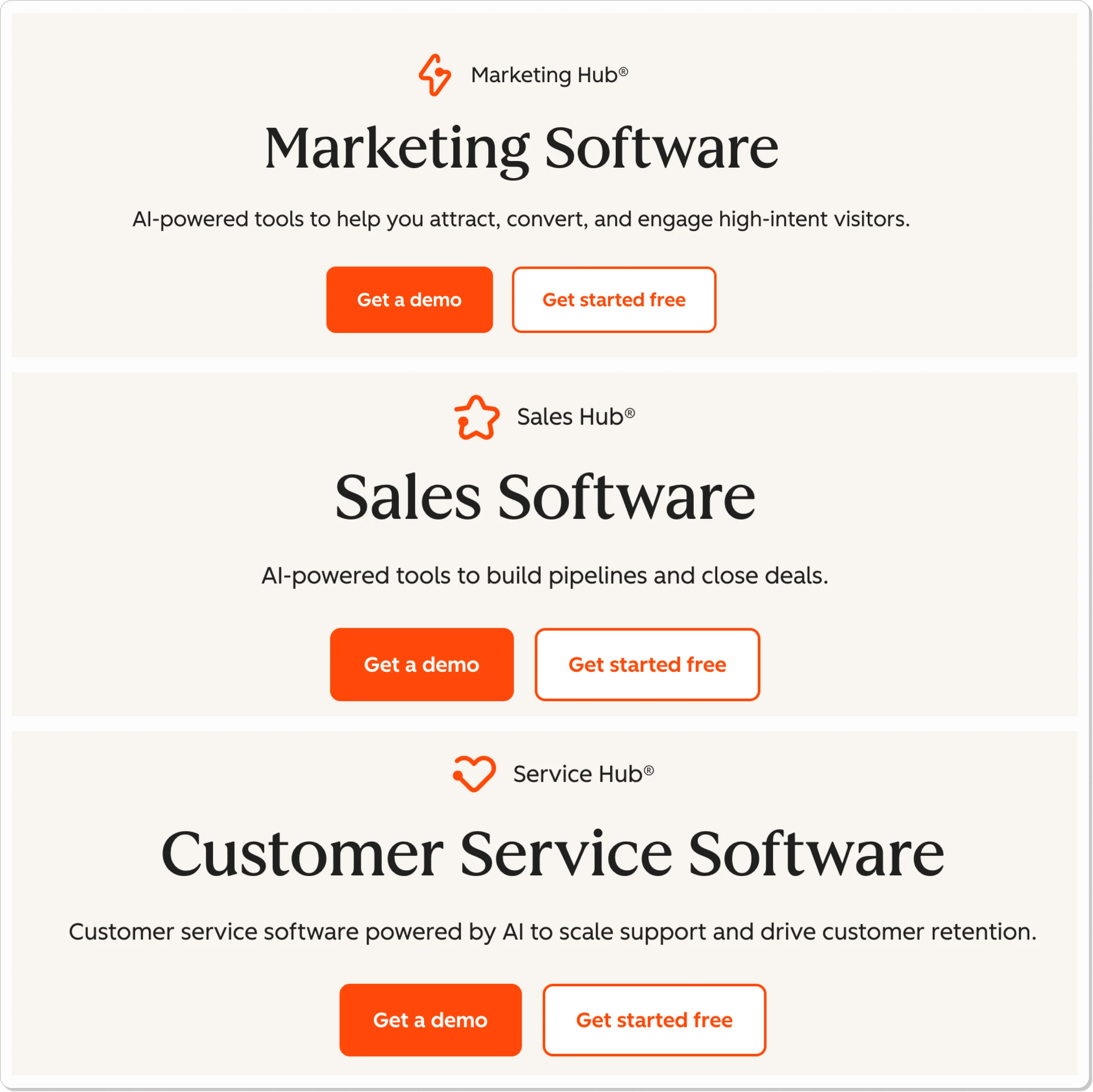
This SaaS content strategy is all about creating a dedicated landing page for each segment. These pages are usually grouped under a single Solutions section of your site. Each page showcases the different ways your SaaS product serves various user groups.
Why this strategy works:
- Highly relevant content. Each solution page speaks the language of a specific audience, addressing their unique goals, challenges, and pain points.
- Better conversions. Since each page is tailored to a specific audience, solution pages usually outperform general overview content — which makes them a great tool for turning blog visitors into leads.
- Boosted SEO opportunities. By creating segment-focused pages you can rank for a wider range of highly-specific, long-term queries, such as “CRM for marketers” or “customer support system”. This increases your visibility across multiple audience-specific searches.
Here’re a few nuances to keep in mind while implementing this content strategy:
- One segment per page. The strength of this approach is moving away from broad overviews and zeroing in on specific use cases.
- Customize content for each segment. While the overall page structure across the Solutions section should be consistent, the product messaging on each page should be tailored to the specific audience.
Highlight the most relevant features, address key pain points, pick the most useful customer reviews, and showcase to most impactful use-case scenarios.
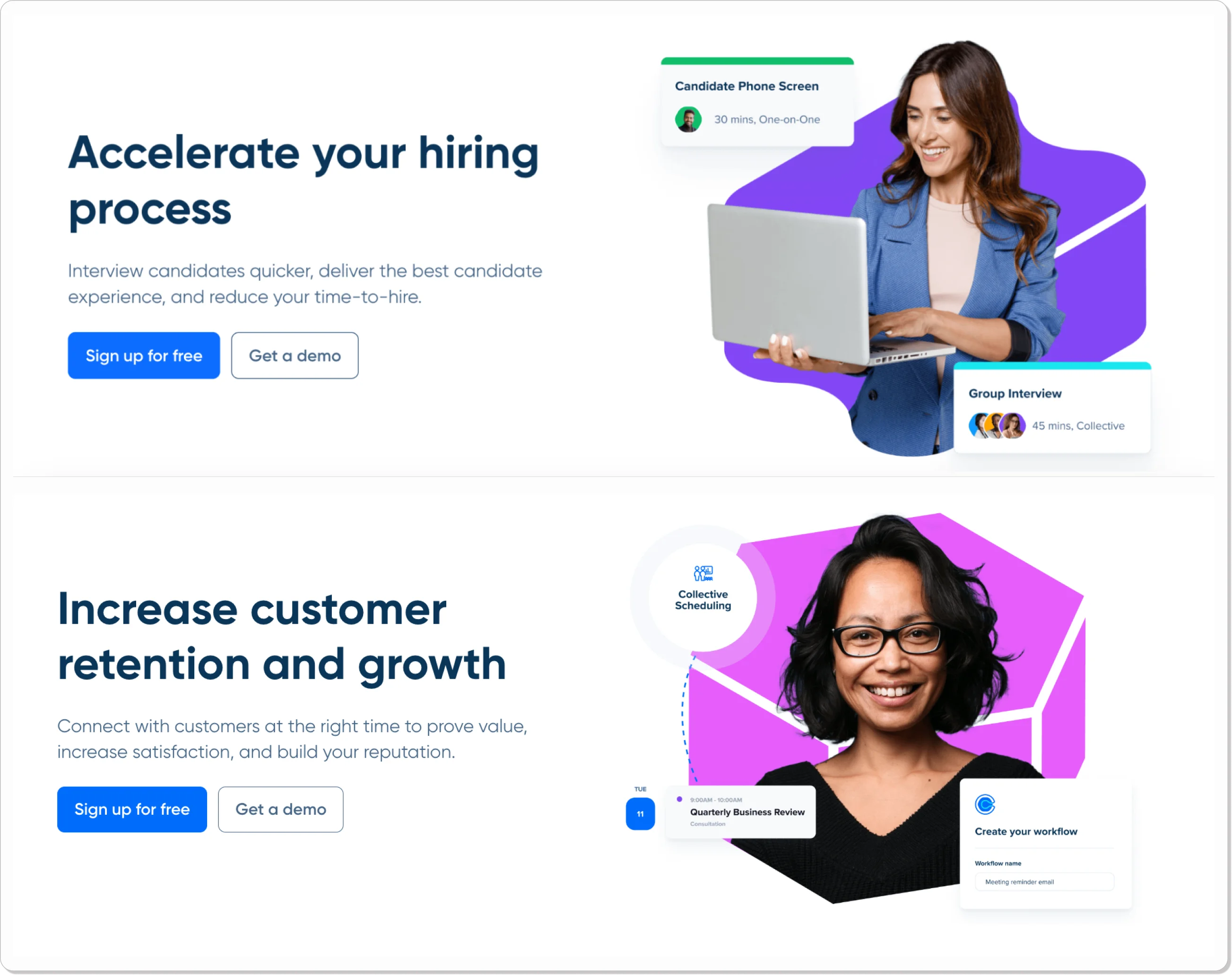
Take Calendly as an example. Their solution pages clearly outline the benefits each role will get from their product. For HR, the emphasis is on accelerating the hiring process; for support teams it’s on boosting customer retention:
- This strategy is suitable for low-competition keywords. If there is heavy competition for your target keywords in the SERPs, it’s better to combine this strategy with strategy #1: first publish a category-wide product overview, and then funnel traffic from that overview to your solution pages.
Examples of solutions pages in B2B-SaaS:
💡 Expert Insight: Posting reviews and side-by-side comparisons on your own blog is pretty much the norm across tech
Many SaaS founders, marketers and content leads still hesitate whether they should write about competitors on their blog, and if it is ethical to put yourself in first place.
Here’s the insight: your customers should learn about your product from you — not from a competitor. If you don’t publish the comparison, someone else will — and their version definitely won’t put you in first place.
So take the wheel: publish reviews, compare your solution with others and make it obvious why your product is the best.
MoFu Content: 100 Pieces for Customers Who Can Benefit From Your Product
The next level is the MoDu stage. Here, users already know their problem but haven’t picked a specific solution yet.
Content here should show why your product is the best choice. For this stage, you usually need around 100 pieces of content, spread over the first two years.
Let’s see some content strategies that work best for covering MoFu topics:
Strategy 7. Product Knowledge Base
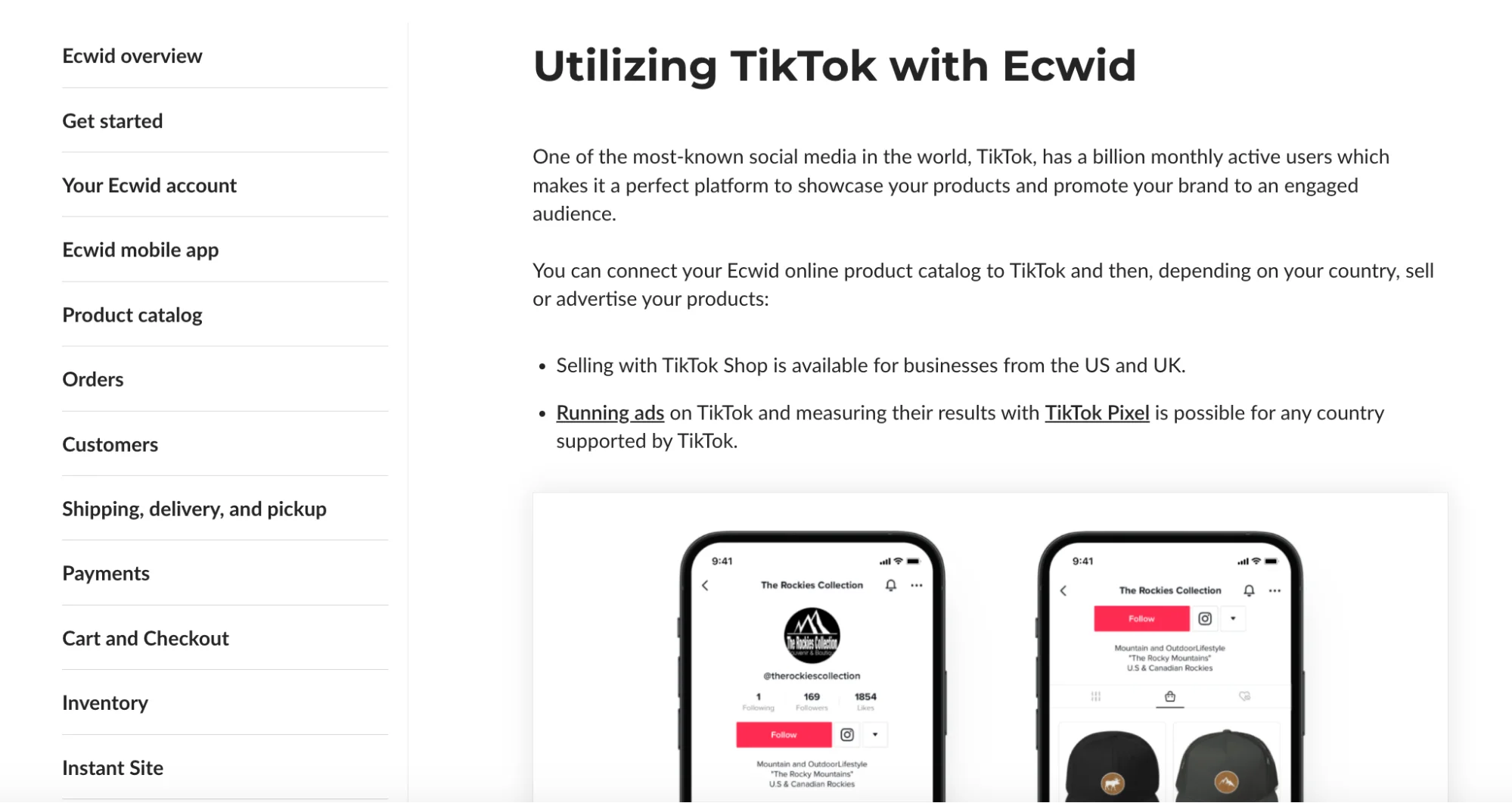
Product knowledge base is a one-stop hub for everything your users need: step-by-step guides, manuals, answers to frequently asked questions, configuration tips, etc. Typically, the support team takes care of the knowledge base, helping users get answers faster while reducing the load on customer support.
The core idea of this strategy is to turn your knowledge base into a SEO powerhouse by optimizing each guide and how-to for your target keywords. This way, each article will not only help users, but also drive organic traffic to your site.
How to make this strategy work?
Ideally, you want your marketing team to work hand in hand with support so that knowledge base articles are created with SEO in mind right from the start.
However, if you already have existing product documentation, you can still optimize it:
1. Audit your current knowledge base. Check what content you already have. Make sure it’s being indexed, and review headlines, structure, URLs, and meta descriptions. See, which articles are already bringing traffic and which ones are getting lost in the search results.
2. Pick keywords and topics. Use data from Google Search Console and tools like Ahrefs and SemRush to find keywords you can rank for. Focus on specific long-tail keywords — they often bring consistent, highly relevant traffic.
3. Optimize your content. Each article should give a clear step-by-step instruction or a comprehensive answer to a question. The more detailed and user-friendly the content, the higher the chance of ranking at the top.
Make your articles more valuable by adding screenshots, examples and tips. Consider using animated GIFs instead of static screenshots to show processes in action.
4. Optimize for SEO. Structure your content with clear headings (H1–H3), meta tags, and alt texts, and add relevant keywords. Link your knowledge base articles to other pages on your site to help search engines understand the content hierarchy and make it easier for users to find what they are looking for.
Examples of knowledge base articles optimized for keywords in B2B-SaaS:
Strategy 8. Case Studies
A case study is a real-life story showing how your SaaS product helped a client solve a problem or achieve measurable business results. Case studies are a true brand asset.
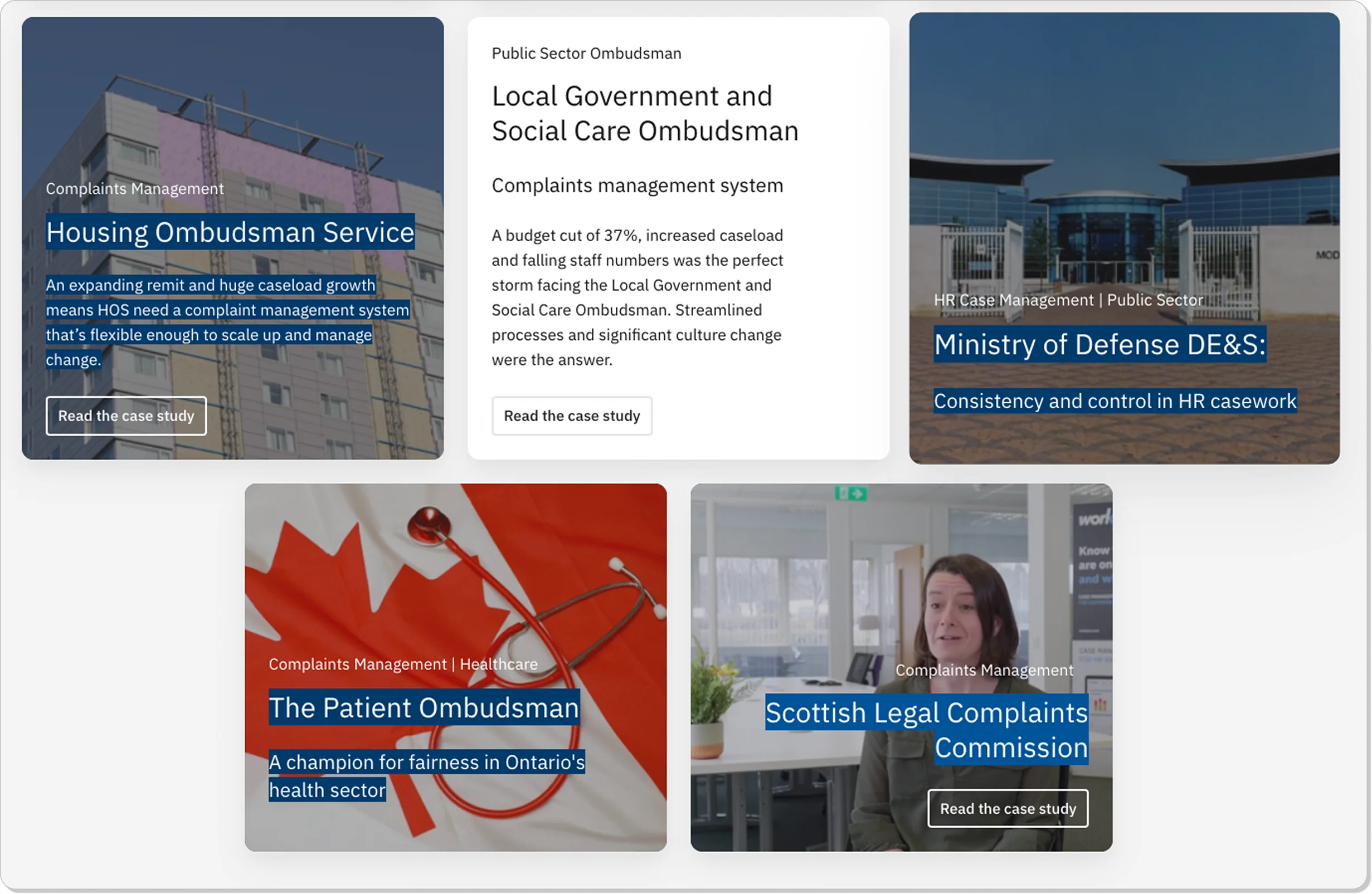
By publishing case studies on your site, you achieve several goals at once:
- Keyword expansion. Each case study tells a sport with a specific challenge, niche, product, and outcome. By sharing this variety of customer experiences, you cover more relevant keywords.
- High-quality expert content that ranks. Google favors unique, practical materials, and case studies deliver exactly that — real-life stories showcasing your product’s impact and your team’s expertise.
- Increased engagement and conversion. Success stories by real people grab readers’ attention and feel more persuasive than sales copy. That’s why case studies are a great tool for turning cold traffic into leads.
- Building trust and driving sales. You can use data from case studies — results, customer quotes, growth metrics — on product pages to highlight your SaaS product’s hands-on value. Your sales team can also use case studies as proof points when pitching to prospects.
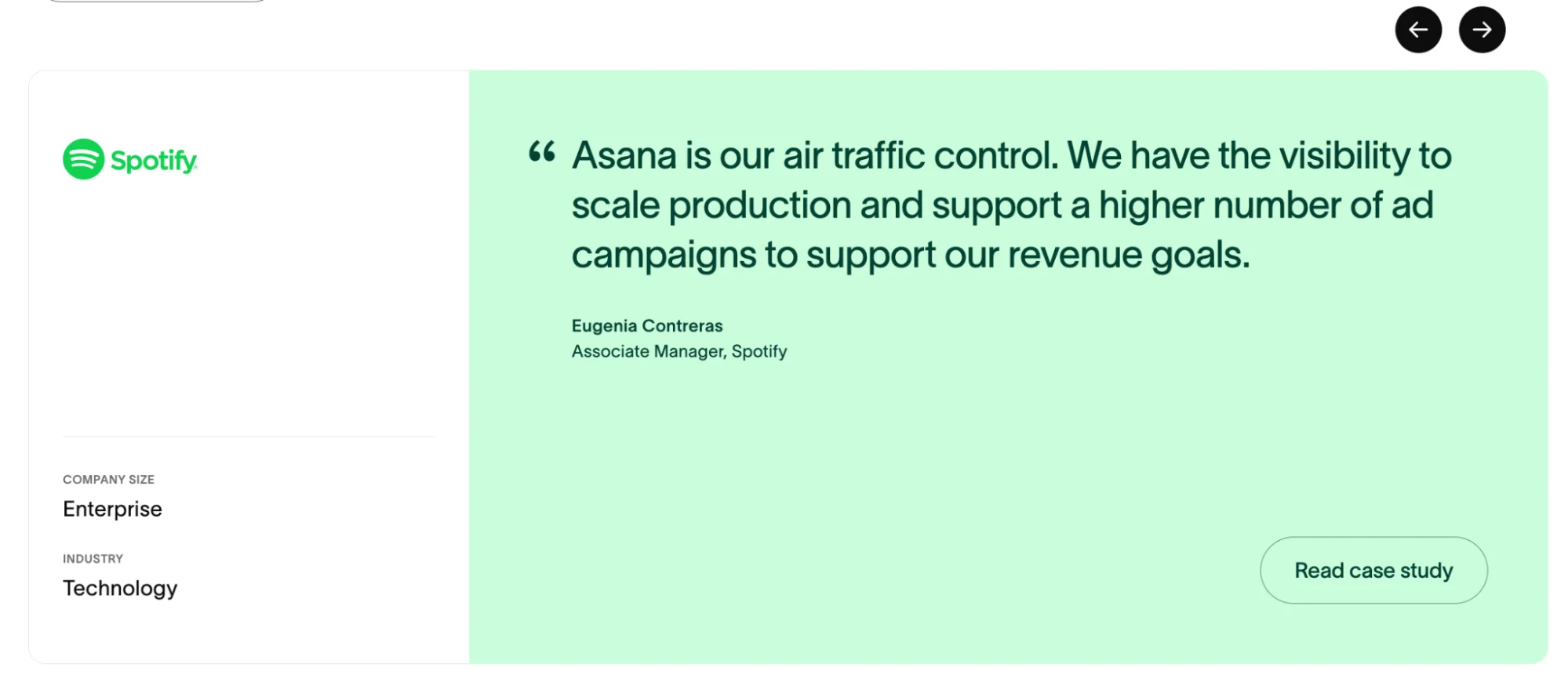
Let’s break down how to create a case study that delivers maximum value:
- Pick the right clients to create case studies. Choose projects where your products made the biggest impact or clearly demonstrated its value.
- Choose keywords and topics. With tools like Ahrefs or SemRush, find search queries that your customers use when looking for solutions. It is especially effective to optimize case studies for low-volume, pain-point keywords.
- Build a clear case study structure. The classic case-study formula: Problem → Solution → Results. Start by describing the client's challenge and explain in detail how your SaaS product helped and what outcomes were achieved (e.g. increased sales, faster processes, higher conversion rates, etc.).
- Add highlights and eye-catching details. Showcase the most compelling quotes and numbers visually. Many case studies start with a section that puts the biggest wins right up front:
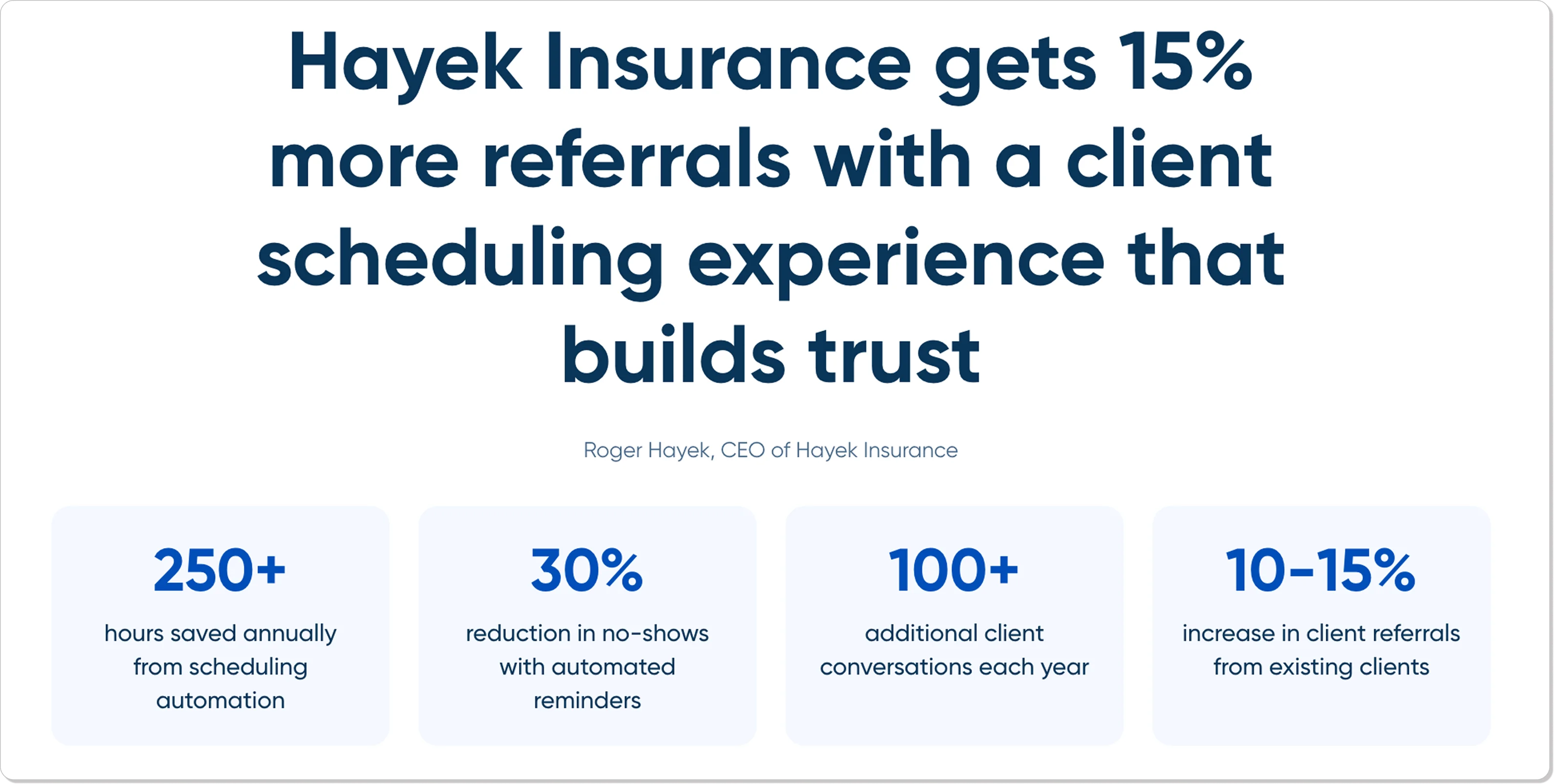
What else can make a case study more engaging? Include sample workflows, prototype snapshots, annotated screenshots, and, of course, customer photos.

Examples of case studies in B2B-SaaS:
Client logos and case studies are a strategic brand asset. Every published case study builds trust, conversions, and brand visibility.
So whenever you have the chance to request a client success story or logo — don’t hesitate to do so! This content will pay off both in marketing and sales.
Strategy 9. Expert Roundups
Roundup is essentially a collection of expert insights: you gather opinions, tips, and comments on a topic from several experts — and publish them in one article.

From an SEO perspective, roundups come with a number of advantages:
- Boost content authority. When you bring multiple expert opinions into one piece, search engines tend to view it as more valuable and trustworthy.
- Create opportunities for organic backlinks. You quote experts — they share your article with their audience. It’s a win-win! Just make sure to link back to experts’ pages; this small courtesy dramatically increases the chances they’ll promote your piece.
- Keyword expansion. Experts often phrase things differently than you do, which helps you cover additional semantic variations and give readers a more comprehensive view of the topic.
Beyond SEO advantages, roundup posts are a great way to build relationships. Many brands don’t know how to break the ice with experts, and asking for a short comment is the perfect first touch — simple for the expert and valuable for you.
This creates a great foundation for long-term collaboration. As a next step, you can ask the expert to create a guest post, co-host a webinar, start a partnership, or introduce your SaaS product to their audience.
Examples of roundups in B2B-SaaS:
Strategy 10. Pillar Pages
Pillar pages are the anchors of a topic cluster — a core page supported by 7–11 in-depth articles that break down one broad subject from different angles.
In SEO, the pillar page strategy is one of the most effective ways for rank for high-volume and high-competition keywords that drive the most value for the business. These can be commercial intent keywords — like “project management tools” — or broad informational searches that help you build brand awareness.
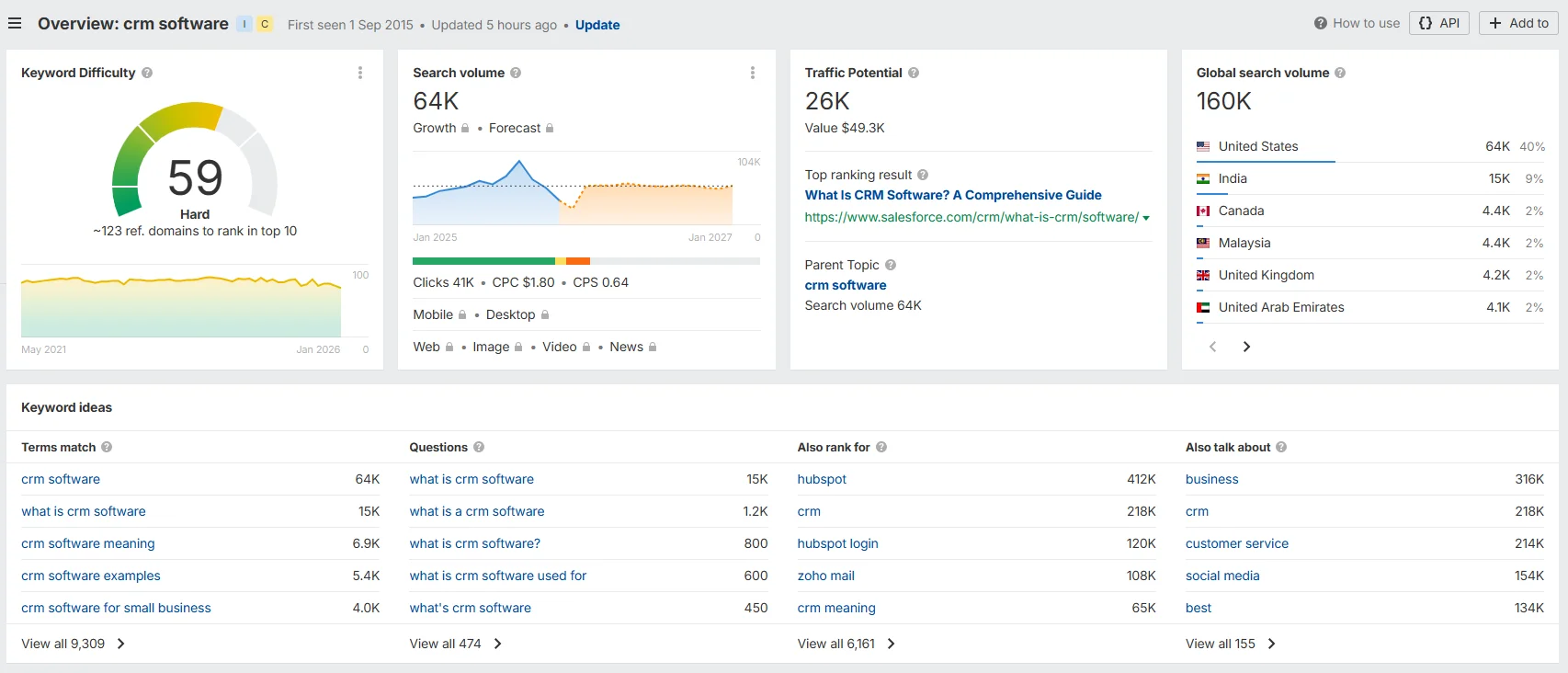
Search results for these kinds of keywords are usually dominated by long, deeply-researched content: comprehensive guides, detailed tutorials, and expert articles that cover dozens of related keywords. In other words, you won’t break into the top with a single article — the competition is simply too strong.
The pillar page strategy utilizes a slightly different approach. Instead of trying to rank for dozens of keywords with just one all-around article, we create a series of pieces that work as a cluster. Each article digs into one specific angle of the topic, and all of them are interlinked. The result is a clean, intuitive content structure that search engines can easily understand and users can navigate with ease.
This approach builds topical authority — a key signal for search engines that our site truly owns this specific subject. With strong topical authority, you can compete for high-volume, highly competitive keywords.
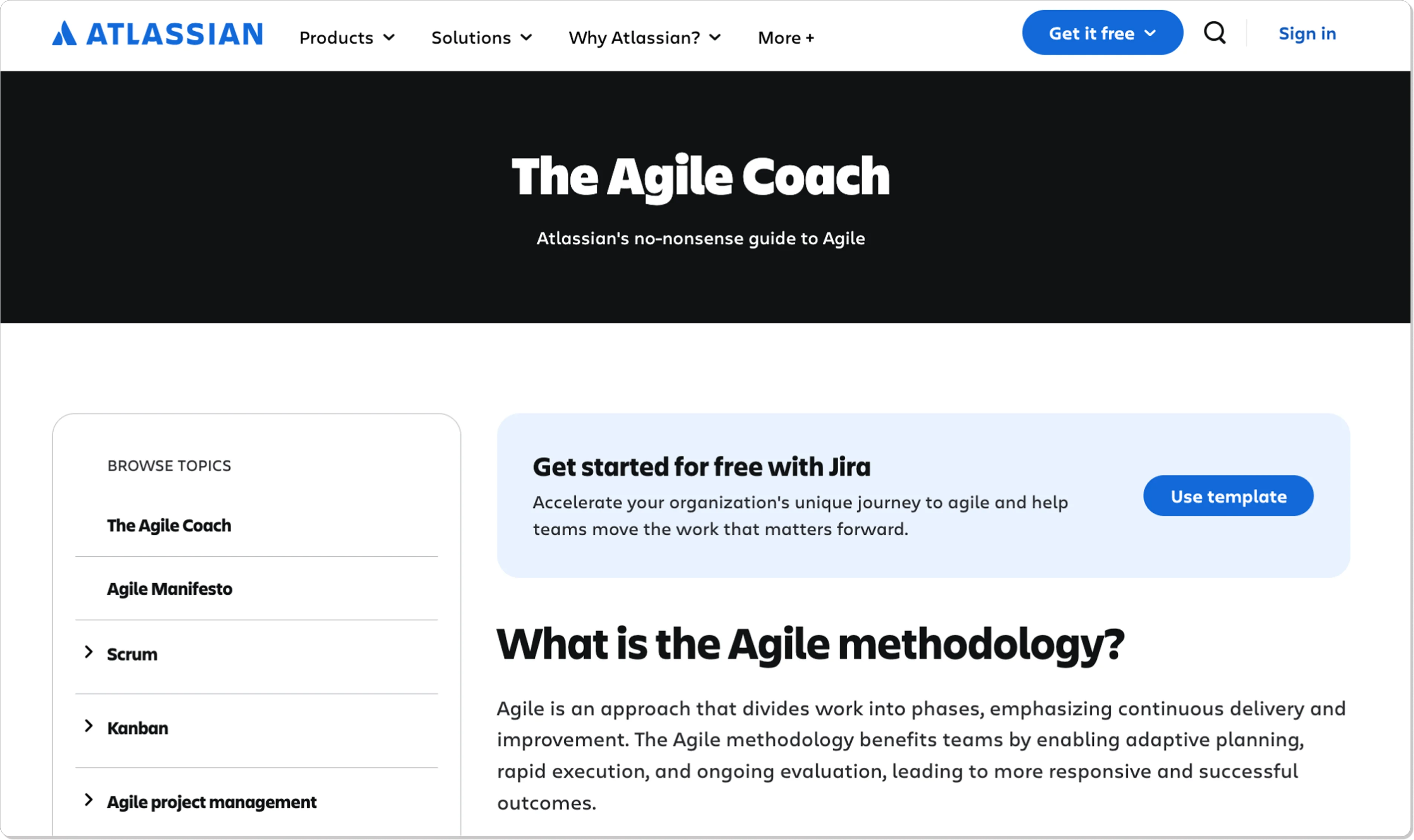
Take an example from the Atlassian team — their pillar page for the “Agile” cluster. The pillar page anchors a series of articles that cover Agile manifesto, Scrum, Kanban, and other related subtopics. All the articles are interlined and the pillar page itself provides clear navigation. This entire cluster consistently ranks on top for a high-volume keyword “agile methodology”.
A few practical tips on how to roll out the strategy yourself:
- Choose the topic. Your most commercially viable topic is usually obvious — as well as the keywords. Chances are you’ve wanted to cover this topic for ages, but didn’t dare because the SERP is so competitive. A pillar page is your chance to break into the top.
- Select keywords. You can find relevant keywords in tools like Ahrefs and Semrush. What’s most important when choosing keywords for both the pillar page and the subarticles is that they should be interconnected and form a clean and logical content structure. Your content cluster should look like an ecosystem rather than a collection of random posts.
- Create expert-level content. If you want each article to add up to your topical authority, you should bring in subject matter experts — internal or external. Their input will help you create unique, in-depth content that search engines will see as valuable.
You can find qualified experts on Upwork, an international freelance marketplace. Search for “[niche] + consultant, supervisor, analyst”. Rates for a consultation based on a pre-prepaired list of questions typically start around $200–300 and vary depending on expertise. The talent pool is large, so finding the right specialist is usually not an issue.
Building a pillar page and a full topic cluster around it is a huge work, but it is justified by a clear goal: to rank on top for the most high-volume and high-competition keywords.
At our SEO agency, we typically use this strategy to capture the keywords that matter most for the client’s business.
The beauty of pillar content is that it can be repurposed across formats so it drives not just for SEO, but your overall marketing efforts.
- An e-book or downloadable guide. Combine all cluster articles into one comprehensive resource. It can act as a strong lead magnet that will help you grow your subscriber base and capture leads.
- An email campaign. Turn articles into an email sequence and use it to warm up your audience and drive traffic back to the site.
- A printed magazine. Adapt the cluster content to publish it as a branded magazine. You can hand it out at events, conferences, and other offline events.
Examples of pillar pages in B2B-SaaS:
💡 Expert Insight: Bring in experts to create truly valuable content
At the BoFu stage (bottom of the funnel), your in-house content team can usually take the lead. Articles at this stage focus on the product, and your team typically has deep knowledge of both your solutions and competitors’ offerings.
For MoFu content (middle of the funnel), the focus shifts from the product itself to the industry and customer challenges. That’s why it is essential to involve niche experts, who can share practical, in-depth insights.
ToFu Content: 200 Pieces to Get Your Brand in Front of Everyone
Finally, we reach the top of the funnel — ToFu. The goal of content here is to fill your funnel with a wide audience. You’re not trying to sell yet — you’re educating, engaging, building trust, and boosting brand awareness.
ToFu content should come last, once you’ve mastered SEO and want to claim a leading spot in your niche. Around 200 ToFu articles can help make sure everyone knows about your product!
Strategy 11. How-to Articles (Pain Point SEO)
When you’re working on BoFu and MoFu content, the focus is usually on the product itself — how it works, how to integrate it with other platforms, and how it stacks up against alternatives. With this ToFu-level strategy, you flip the perspective and start from the customer’s real-world tasks and pain-points.
The idea behind this strategy is simple: you create a detailed, step-by-step guide that solves a real user problem and position your product as one of the tools that helps complete the job. This kind of content builds trust and demonstrates your SaaS product’s value in a real-world context.
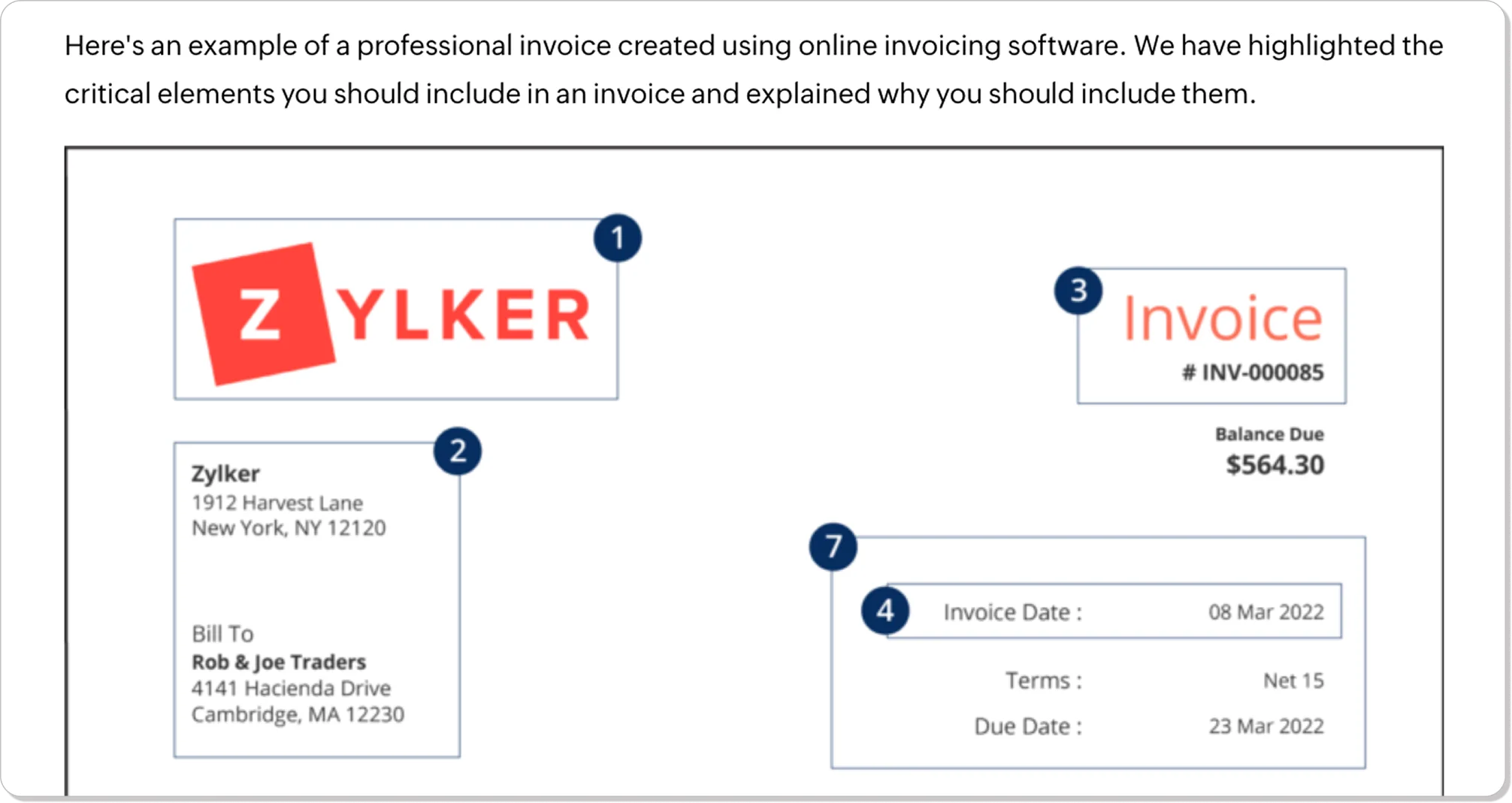
For example, let’s take a look at Zoho, a cloud-based platform for managing sales and finance. Their team published a step-by-step guide on how to create an invoice. They walked readers through the essential components of an invoice and highlighted important nuances. At the end, they showed how easy it is to create an invoice with their Zoho Invoice tool.
To put this strategy into practice, follow this workflow:
- Collect relevant pain-point keywords. With the help of Ahrefs, Semrush, or similar tools, find search terms that reflect users’ problems and challenges and show solid search demand.
- Audit the top SERP competitors. The key to ranking at the top is creating better content than what’s already there. Review 8–10 top pages for each target keyword (their structure, depth, visuals, etc) and map out where you can make a significant difference.
- Write a comprehensive, step-by-step guide for each pain-point keyword. Start by describing the overall approach to solving the problem — and the expected outcome. Then provide a clear, hands-on walkthrough how to solve the problem using your SaaS product.
Examples of pain-point guides in B2B-SaaS:
Strategy 12. Solutions Overviews
If the SERP is already stacked with strong how-to guides from competitors, a smarter approach is to create a bigger-picture article that reviews all possible solutions.
Google tends to rank these broader, roundup-style articles higher because they provide more user value. Instead of walking a reader through a single solution, they provide a panoramic view of all possible solution options — and help the reader choose the most appropriate one.
A good example is Pipefy’s article on 3 ways to improve work performance and advance career. Not only does the article break down the three promised methods, but it also gives 21 practical tips. The result is the article that looks at productivity and career growth from multiple angles and ultimately delivers more value to the reader.
How to make this strategy really work:
- Present each solution as a mini-guide. Structure your article so it’s clear that it’s an overview of solutions. Each section should take the reader into the details of a specific approach.
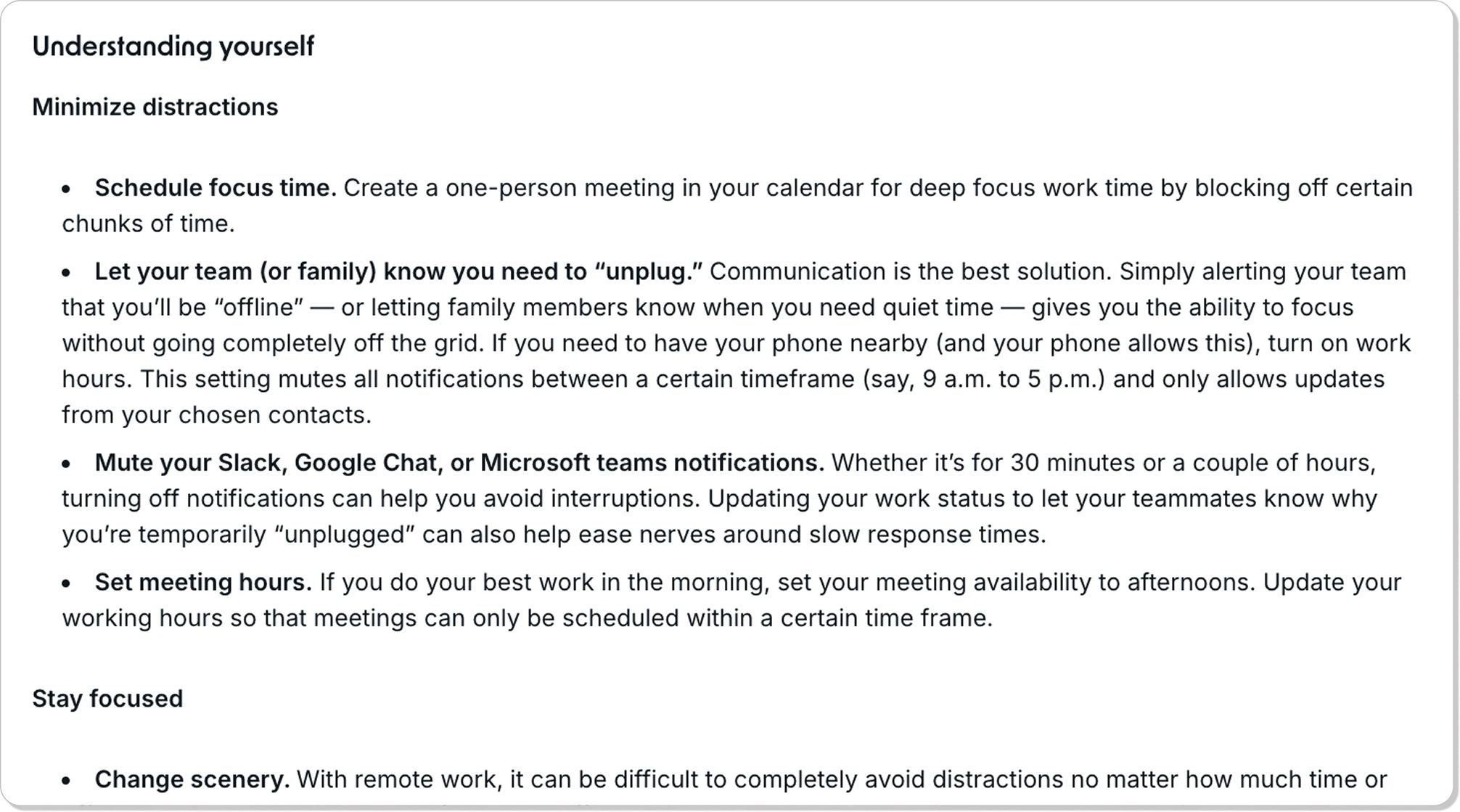
- Highlight the pros and cons of each solution. This demonstrates your expertise and helps readers make the right choice.
- Add visuals. Include screenshots, tables, charts, and infographics. This will make the content even more useful and boost reader engagement.
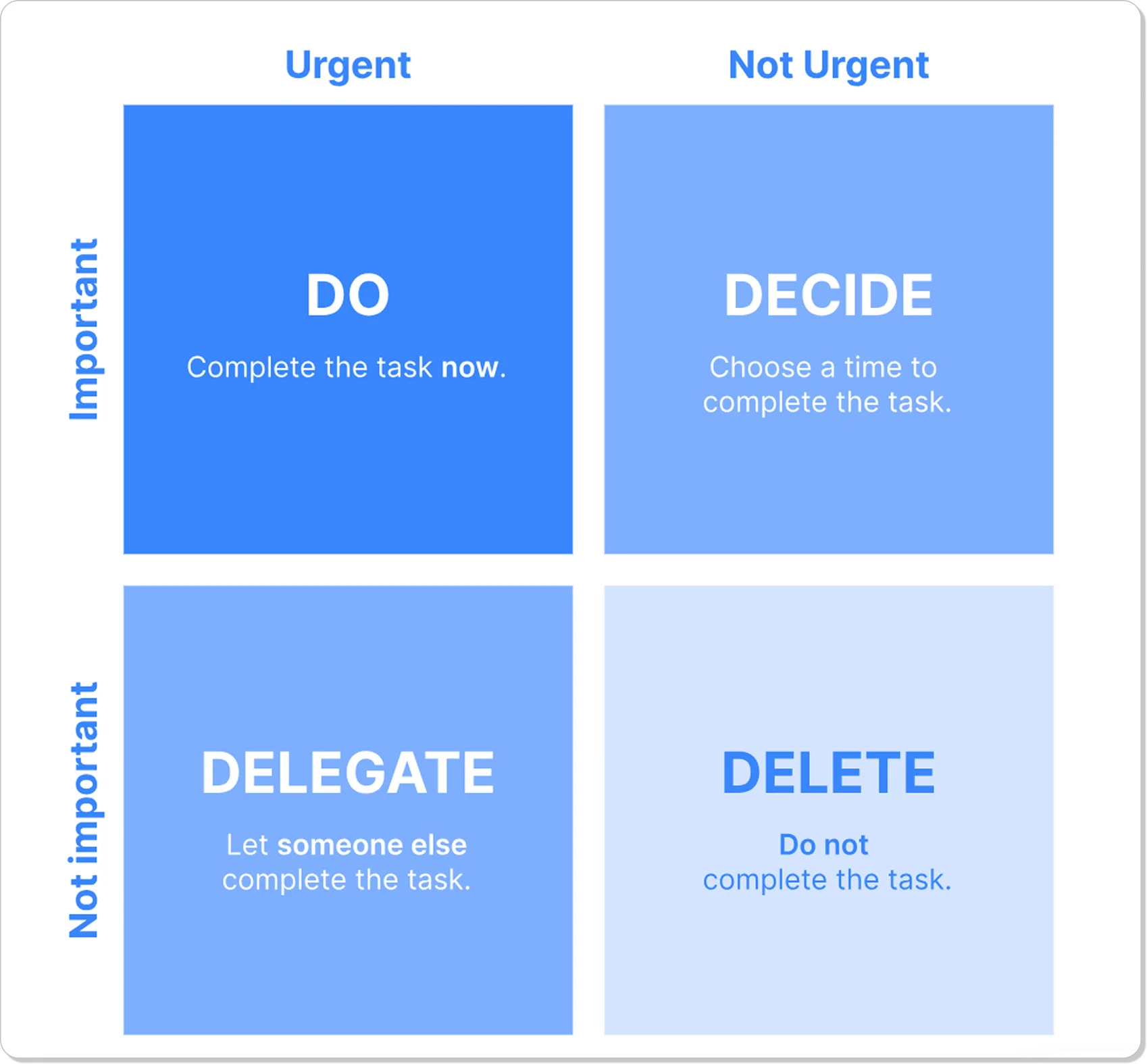
- Feature your SaaS product. Make sure to include your solution among the most effective options. Explain why your product is a perfect fit for solving the problem. Support your claims with customer testimonials and case studies.
Examples of solutions overview articles in B2B-SaaS:
Strategy 13. Comprehensive Guides
Unlike a how-to instruction or tutorial, a guide is a more in-depth and detailed material that explores a topic from multiple angles and covers a whole set of subtopics.
A good example is HubSpot’s Sales Pipeline Guide. In the screenshot below you can see the scope of topics. Each section looks like a standalone article with its own structure, visuals, and takeaways.

Creating a truly in-depth guide takes time, budget, and focus. That’s why teams usually choose this strategy when the competition in the SERP is tough. But when done well, it more than pays off, and here’s why:
- Guides build topical authority. When you create a deep, high-quality material that thoroughly explores the subjects, search engines see it as a strong signal of your expertise in the niche. A well-executed guide can break into the top results even in a highly competitive landscape.
- Guides cover multiple narrow, long-tail keywords. Even if a guide is optimized for just a few primary keywords, it naturally covers dozens of mid- and low-volume search terms — because of its depth. That brings more organic traffic to your site.
- Guides drive audience engagement and trust. Users naturally stay longer with deep, well-structured resources rather than with short posts, which lifts your engagement metrics. And the format itself shows that you understand the topic deeply — reinforcing your credibility and positioning your brand as an expert.
The process of creating a guide is similar to building a pillar page:
- Start with keyword research. Use tools like Ahrefs and Semrush to find high-volume queries people use to find a solution to their problem. Then collect the related long-tail keywords — they’ll help you build a guide that’s deep, comprehensive, and useful for different reader segments.
- Analyze the pages already ranking in the top. The golden rule for guides is simple: if you’re not ready to outperform what’s already ranking on page one, forget the guide idea. To hit the top spot in the SERP, your guide has to be significantly better — which means you need to know the strengths and weaknesses of top-performing content.
- Create a comprehensive, expert-level guide. Build a structure that covers the topic from all angles. Use real examples and case-studies, bring in expert insights, and support content with visuals: tables, graphs, videos, and infographics.
Examples of guides in B2B-SaaS:
Strategy 14. Link Roundups
A link roundup is a curated collection of links to valuable, high-quality resources, articles, blog posts, or other online content related to a specific topic in your niche. It can be a compilation of books, online courses, inspirational sites, etc. For example, Wix published a curated list of the best portfolio websites on their blog.

A link roundup is one of the simplest and fastest content formats — no expert interviews, no heavy research, no deep analysis. Your in-house team can quickly produce such content without bringing anyone else in.
Here’s how to create an effective link roundup:
- Choose a topic. Use Ahrefs or Semrush to look for keywords like “best [category] websites”, “top courses about [topic]”, “best [niche] books”. Such queries tend to bring consistent traffic, because many users are looking for quick ways to dive into a topic.
- Analyze competitors. Review top-ranking roundups and assess their structure, depth, and overall quality. Note, which sites they included in their lists and analyze their traffic and backlink profiles.
- Create your own curated list. Prioritize websites and projects with strong traffic, solid backlink profiles, and good reputation. This increases the chances that those site owners will notice the mention — and link back to you.
Another important thing to keep in mind is content quality. To outrank competitors on page one, your roundup needs to be more detailed, more comprehensive, and more useful.
- Start with a brief intro to the topic. Before diving into the list itself, give readers context about the topic, highlight important nuances, and explain the criteria you used to select the resources.
- Add a brief expert note for each item of the list. Explain why each resource is valuable and why you’re recommending it.
- Use visuals: screenshots, logos, content previews. This will make your roundup look more engaging and trustworthy.
Examples of link roundups in B2B-SaaS:
Strategy 15. Events Calendars
In every niche, something is always happening — conferences, trade shows, meetups, expert talks, webinars, you name it. And if your goal isn’t just to drive traffic but to build a reputation as a niche expert, this strategy is a must.
The idea is to publish reviews and roundups of upcoming industry events on your site. It can be a full breakdown of one major conference — or a curated list of different events. These posts add variety to your content mix and help you capture event-driven traffic from queries that include specific event names.
Here’s how to put this strategy into practice step-by-step:
1. Create an events hub on your website. Most companies set up a dedicated /events/ section where they publish all upcoming webinars, conferences, and meetups.
Take Asana, for example: their events page makes it easy to sign up for the next webinar or find an online meetup happening nearby.
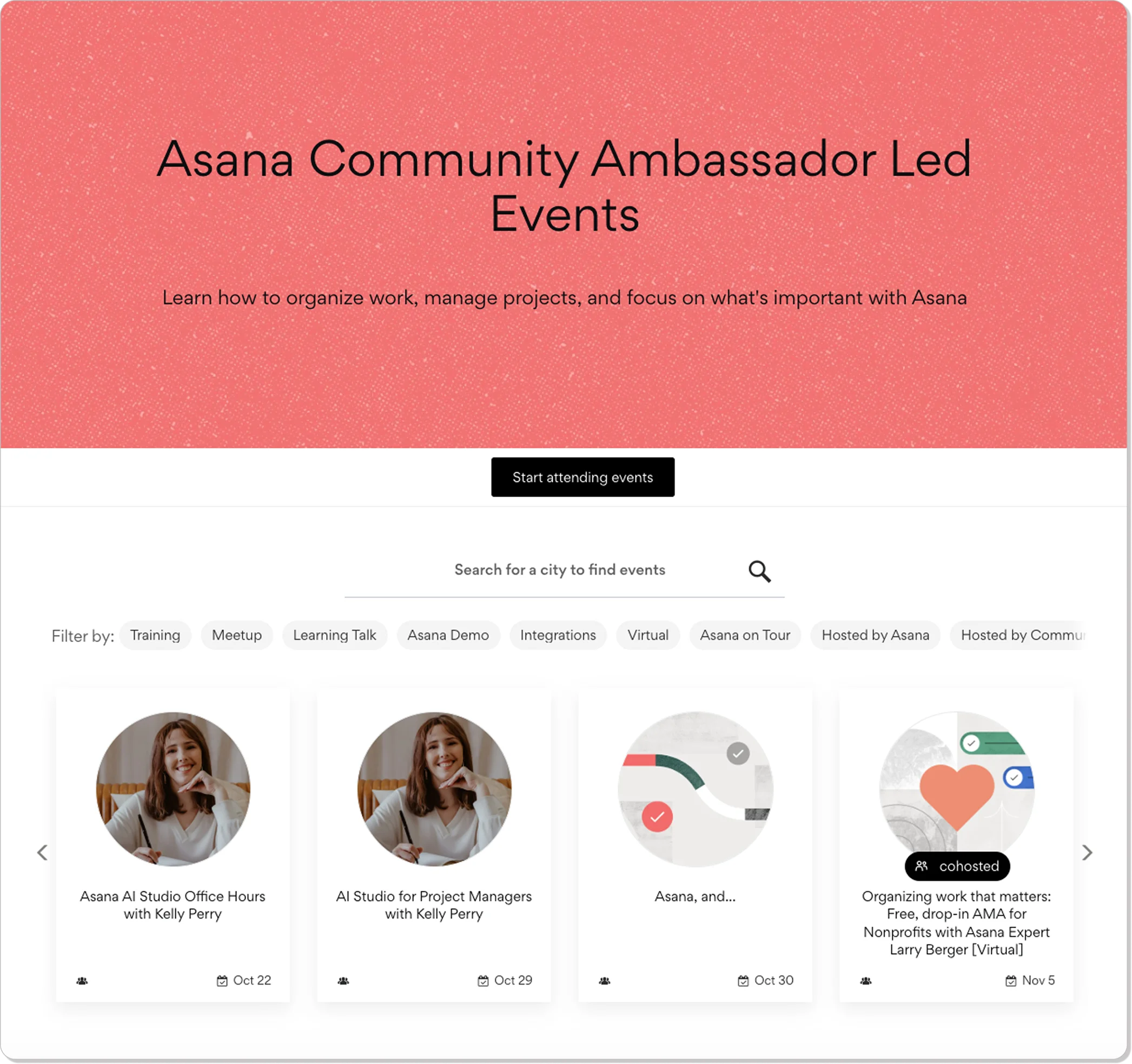
To build your own /events/ hub, we recommend using the WP Event Manager plugin. It lets you quickly set up events calendar and create event pages that look clean, structured, and optimized for search.
2. Create a detailed description of each event. Outline the agenda, introduce key speakers, add photos or videos, and include the location and participation details.
The goal is to make a comprehensive, high-quality overview that can rank in positions 2 or 3 in the SEPR — right after the event’s official website.
Aim to publish each event page about a month before it takes place. This gives search engines enough time to index the page.

When there aren’t any notable upcoming events, companies usually keep the section active by publishing recordings of past webinars and events. MailChimp does exactly that in their events section:
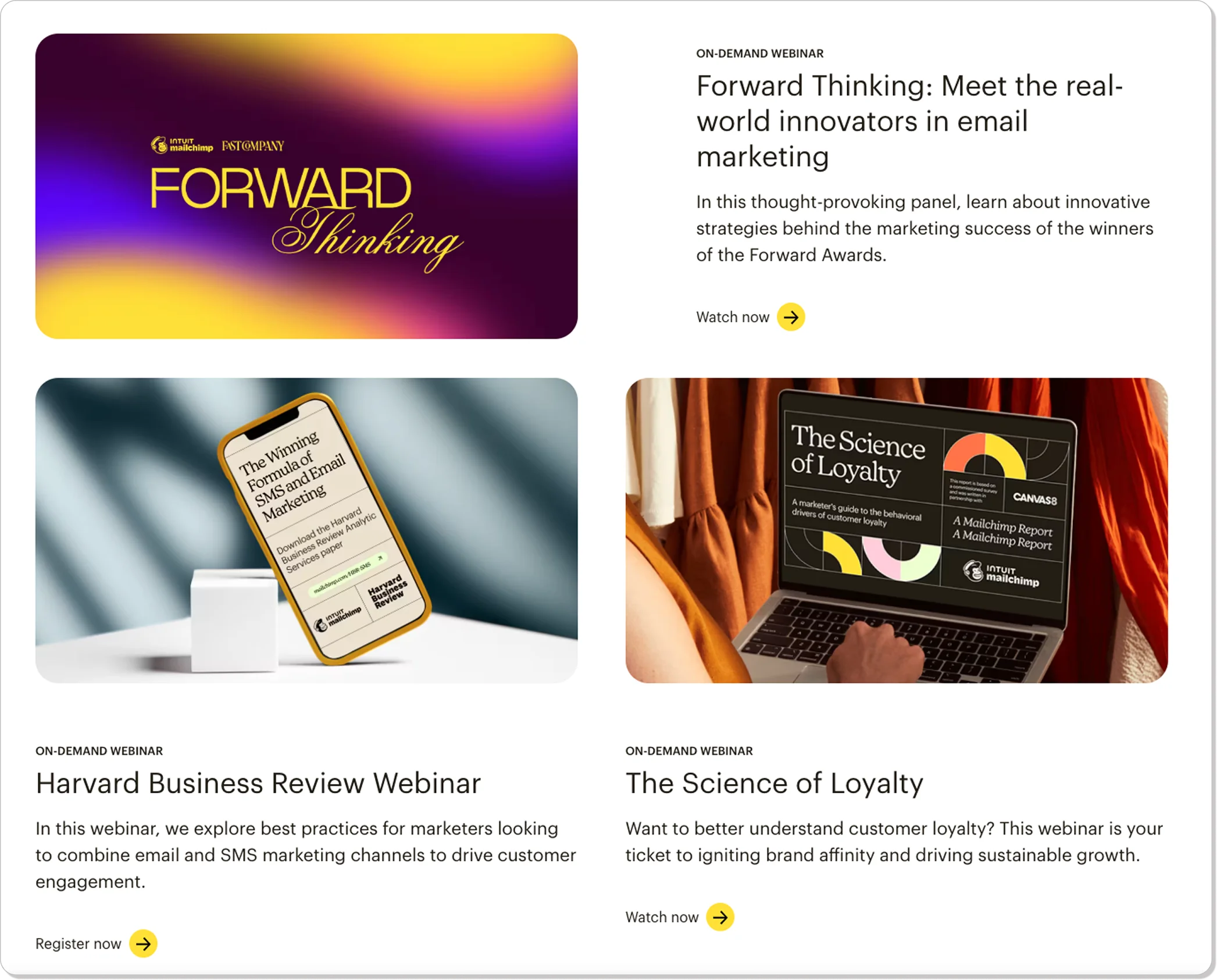
Examples of events calendars in B2B-SaaS:
Strategy 16. Industry Reports
Industry research reports are an expert content format that delivers a comprehensive, data-driven overview of a specific market — including statistics, trends, insights, and forecasts.
When done well, industry reports support your SEO and brand in a number of ways:
- They attract backlinks. Original research and insights are backlink magnets. Journalists, bloggers and industry media frequently reference research data in their content pieces, which reinforces your rankings. One important detail — your research should be publicly available so everyone can link to it.
- They build your topical authority. A strong industry report delivers useful insights backed by real expertise. This kind of content signals to readers — and search engines — that you’re not just in the industry, but deeply understand how it works.
- They drive traffic from research-focused queries. Some users are doing their own market analysis and searching for things like “[year] [industry] trends” or “market overview [industry]”. These types of queries usually have strong search volume, but aren’t too competitive.

Creating an industry research report takes more time and resources than other content formats, but when done well, it becomes a valuable long-term asset.
Here’re a few points to keep in mind when producing an industry report:
- Assemble your team. Bring in niche experts, analysts, content writers, designers, and SEO specialists to ensure your research is both credible and comprehensive.
- Make your report visually engaging. A research report is a comprehensive resource, but it doesn’t have to feel heavy. Use charts, tables, and infographics, and highlight key insights. The clearer and more accessible the information, the higher the chances people will reference your content.
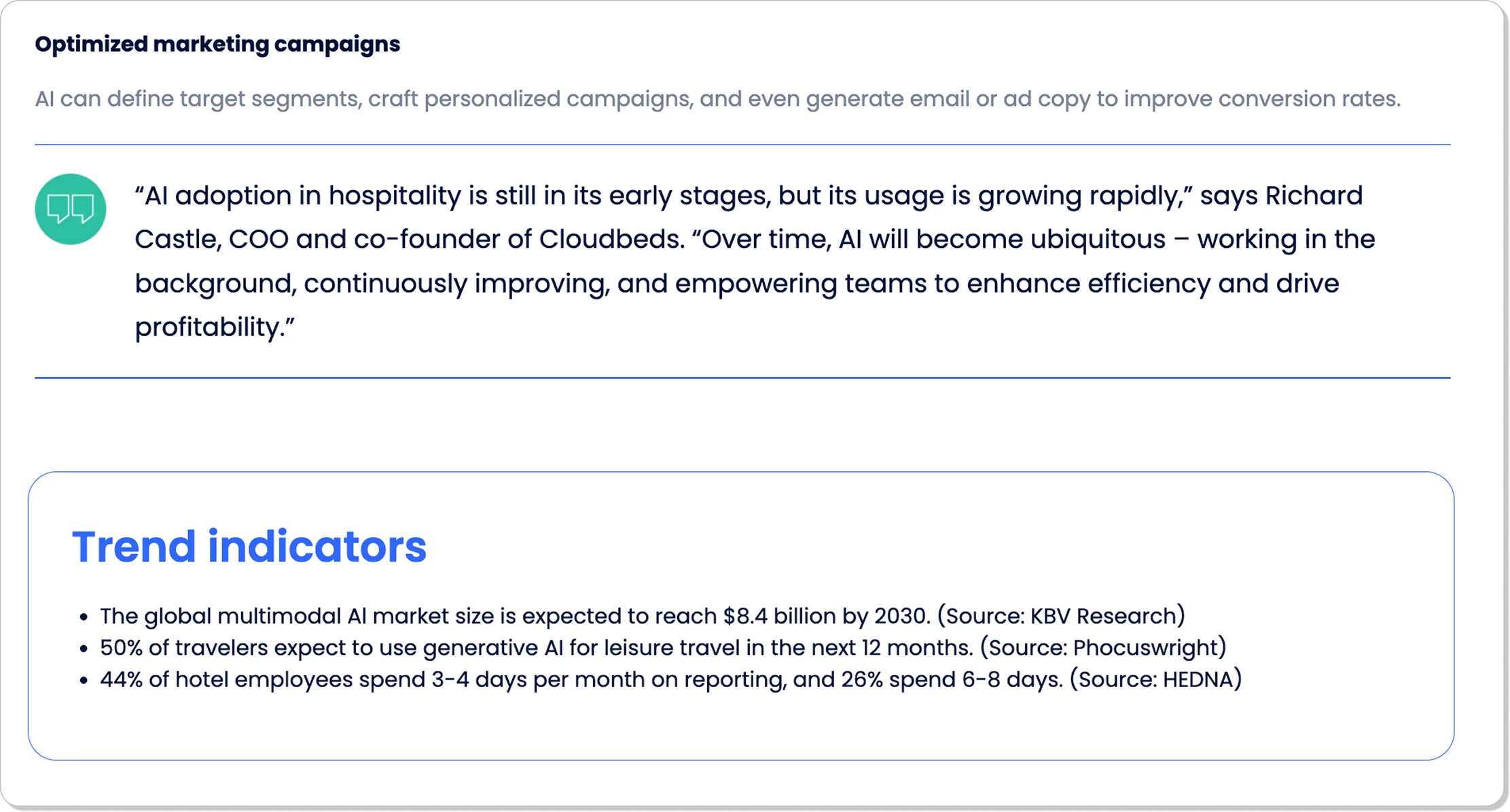
- Make it easy to cite you. Include the brand, author, your brand name, and citation instructions at the beginning and end of your research article. This boosts the chances that people will link directly to your content.
Examples of industry research reports in B2B-SaaS:
Strategy 17. White Papers
A white paper is a detailed informational document that addresses a specific problem or provides a structured overview of a topic. White papers are meant to be more educational than promotional, with the goal of helping the reader understand the problem, evaluate possible solutions, and make an informed decision. They are typically packaged as downloadable PDFs, and access often requires a simple step — like providing an email.
Companies usually use white papers as lead magnets — to collect and qualify leads while delivering valuable, in-depth content.
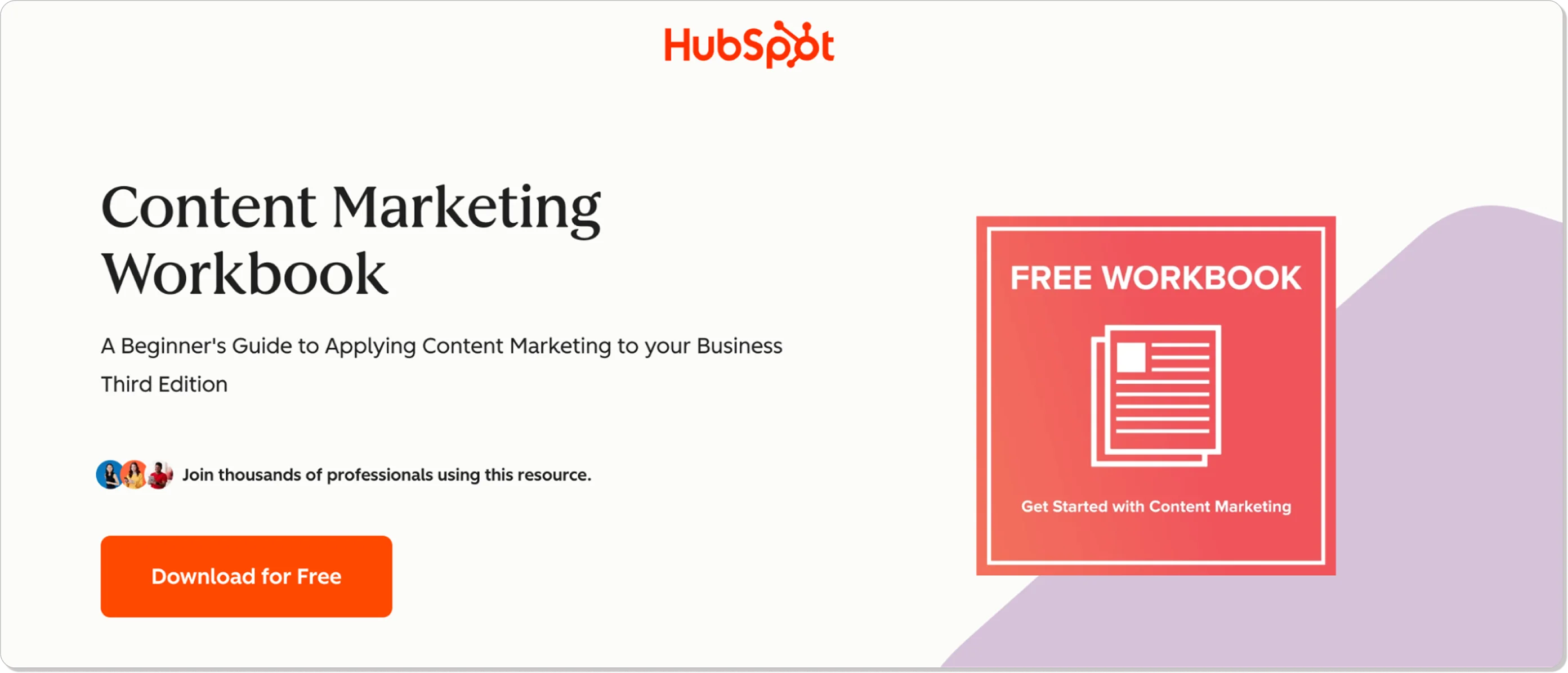
A white paper is a powerful tool for converting cold traffic — especially at the top of the funnel (ToFu).
The conversion process is simple: you attract users searching for a solution to their problem and offer them an in-depth resource — in exchange for their email. After this first touch, the lead enters your nurture sequence that typically lasts for 2–3 months. And only then does your sales team contact them directly.
White papers create positive brand sentiment early in the journey. Rather than selling your product, you offer valuable insights first, which naturally builds trust.
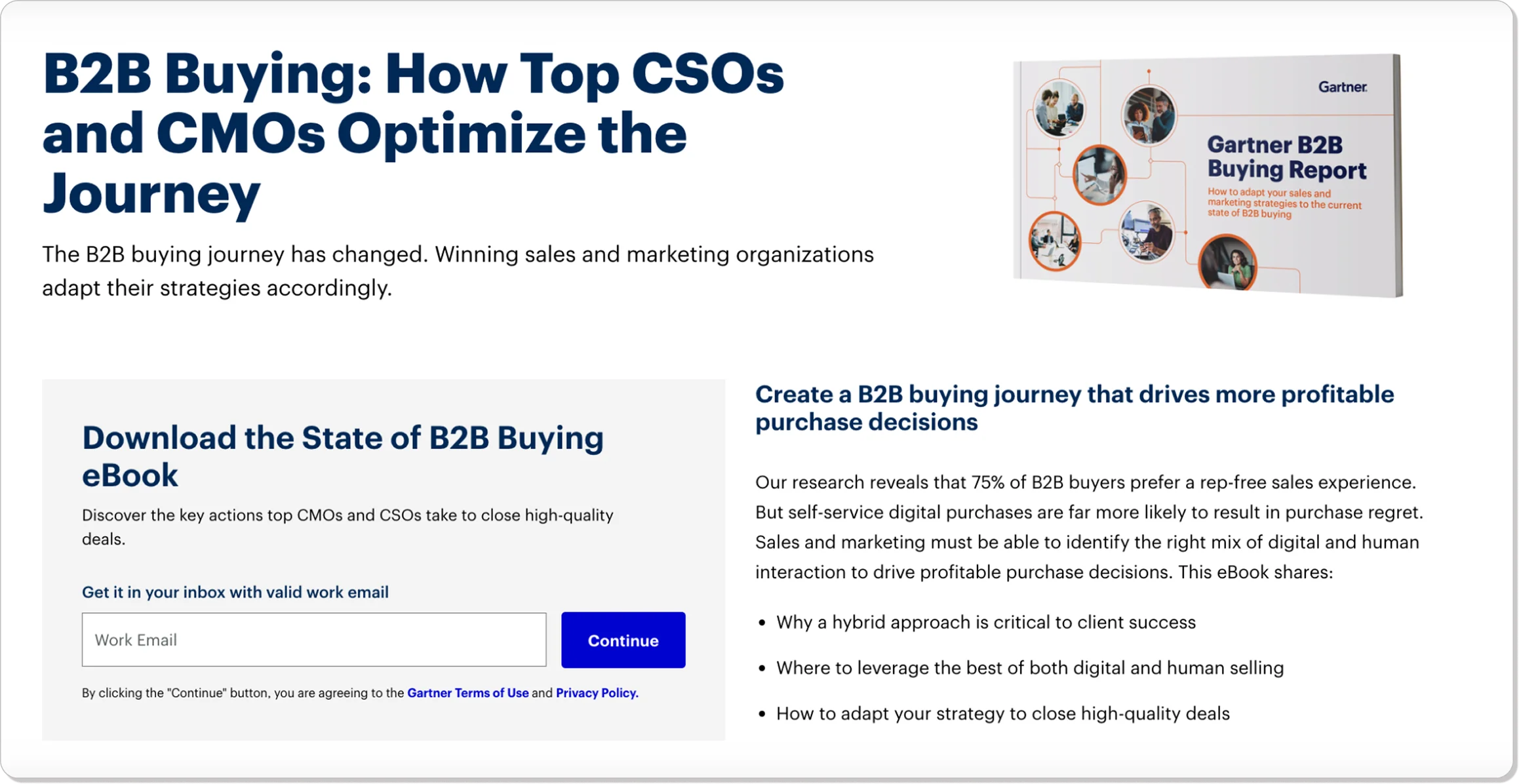
Implementing this strategy typically involves two steps:
1. Create the white paper. It can be a template, a research report, a guide, or a playbook. What’s important is that the document should help the reader solve their problem.
You can build your white paper from scratch or repurpose your strongest content: articles, guides, webinars, etc. Make sure the material is deep, well-structured, and clearly demonstrates your expertise.
2. Build a dedicated landing page for your white paper. On this page, explain why the document is worth downloading: provide a short summary, highlight key insights, and make it clear what categories of readers will benefit the most from it. Optimize the page for relevant keywords and pain-point queries so it attracts organic traffic.
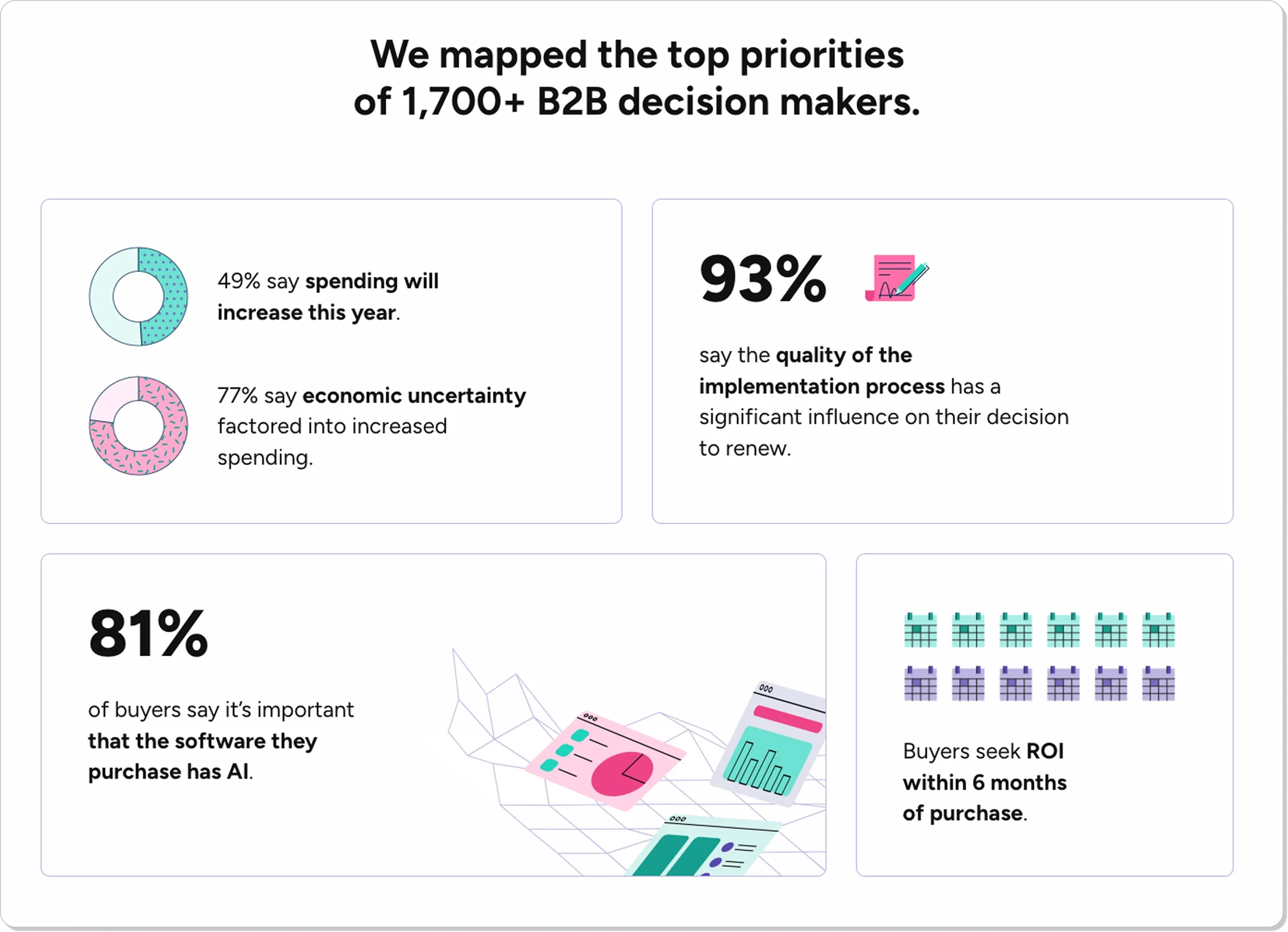
Examples of white papers in B2B-SaaS:
Strategy 18. Expert Interviews
An expert interview is a type of content that leverages the knowledge of a subject matter expert to provide a comprehensive perspective on a specific topic.
Experts interviews don’t just drive traffic — they build trust, because they show readers that you have a deep understanding of the topic and are connected with professionals who shape the industry.
Here’s how Zendesk leverages this strategy: they published an interview with writer and journalist Jon Ronson, author of So You’ve Been Publicly Shamed. The article explores the culture of online shaming and offers practical recommendations on how brands and individuals can navigate public criticism in the digital space.

Since Zendesk is a customer service and sales platform that helps businesses manage customer communications, the topic of digital behaviour and public shaming is perfectly aligned with the brand and highly relevant to its audience. This kind of interview doesn’t just attract traffic from searches like ‘public shaming’ — it also reinforces brand’s topical authority in the niche.
Here’s a practical, step-by-step framework for creating expert interview content:
- Choose the topic and find the expert. List the subject your audience genuinely cares about. Use tools like Ahrefs and Semrush to analyze which topics bring meaningful traffic in your niche. Identify the right experts for the topic — whether that's researcher, keynote speaker, author, influencer, or even your in-house specialist.
- Prepare effective questions. Build your question list around the topics your readers are curious about. One simple approach: mine community discussions by searching “site:reddit.com + [Interview topic]” to see what people are already asking.
- Conduct the interview and turn it into an article. The conversation itself isn’t the final product — it’s raw material. To make it truly engaging and useful, shape it into a well-structured article with pull quotes, visuals, video embeds, and other supporting content.

Many brands publish expert interviews in a very basic format of Q&A: a question written in bold followed by a block of text. This structure is quick to produce, but not always easy to read and digest. By adding visuals, relevant media, quotes, and other elements, you make your piece more valuable — and more competitive in search.
Expert-driven content is valuable, but it’s also resource-intensive. To get the most out of it, treat the interview as a strategic asset. Here’re a couple of small details that can make a huge difference:
- Add links to the expert’s website and social profiles. It strengthens the relationship and increases the chances that they’ll share your article with their audience. And don’t forget to send them the link to the interview once it goes live. 😉
- Add the expert to your Authors or Editorial Team page. Create a dedicated profile page for every expert you feature. Include their photo and bio, highlight their expertise, and link to their website and social media.
This builds trust with readers and helps search engines better understand the expertise behind your content through the E-E-A-T framework.
Examples of expert interviews in B2B-SaaS:
Strategy 19. Free Tool (Product-Led SEO)
Building a free tool is a very effective — yet resource-heavy — strategy. The idea is to create a tool — utility, calculator, service, or lightweight app — that acts as a lead magnet and drives organic traffic to your site. When done well, these tools often go viral — people bookmark them, share them, reference them in articles, and return to use them again and again.
A great example is HubSpot, which offers a suite of free products — from template generators to website grader that evaluates SEO and UX performance. These tools don’t just attract millions of users into HubSpot’s ecosystem — they also earn you high-authority backlinks.
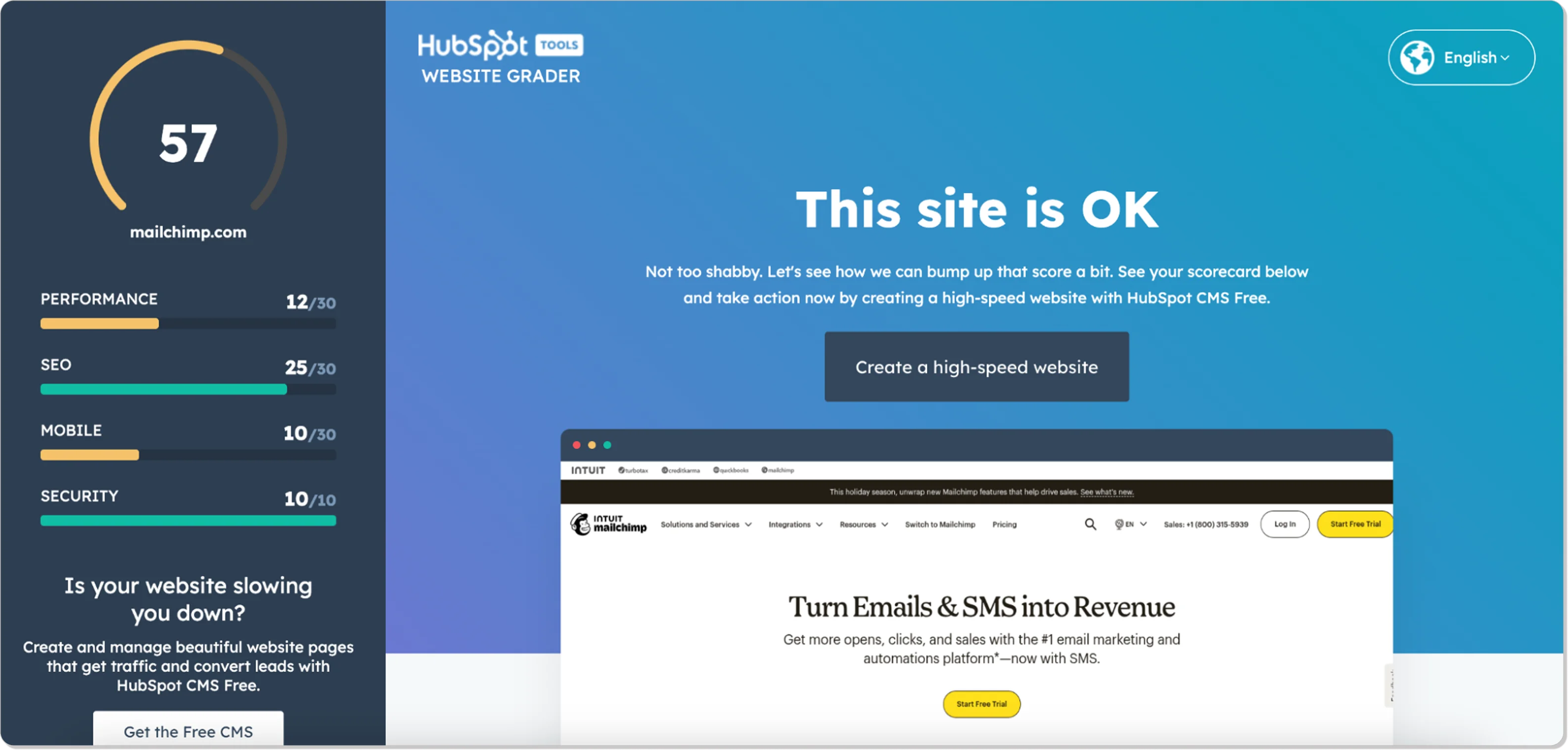
A free tool supports your SEO on multiple levels:
- Builds awareness and trust. People appreciate companies that deliver value without asking for anything upfront — and they are more likely to recommend such brands to others.
- Attracts backlinks. Useful tools get referenced in blogs, reviews, roundups, and forum threads, building a diverse link profile.
- Nurtures users into future customers. Users who have experienced value from your free tool are more likely to become your paying clients.
Because this strategy requires time, budget, and technical resources, it’s worth focusing on high-volume keywords. This means that your tool should solve a popular problem in your niche — one that frequently comes up in search queries.
For example, Shopify’s free AI Business Name Generator ranks at the top of Google for ‘business name generator’ and drives around 650,000 monthly visitors, according to Ahrefs.
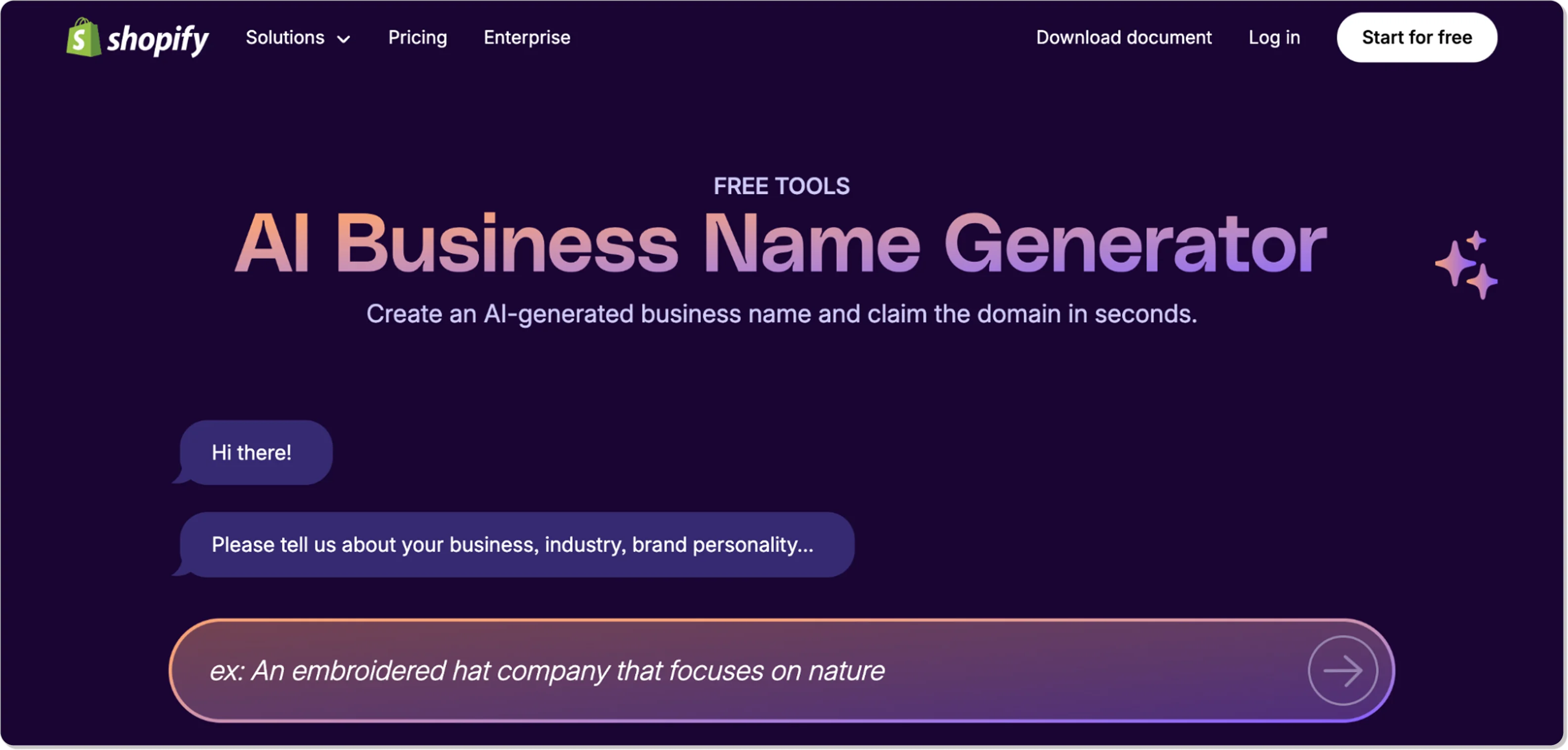
One more thing: for this strategy to really work, your tool has to outperform other free alternatives. It needs to deliver real value on its own — without hidden limitations or frustrating restrictions. When users genuinely benefit from the product — they stick with it, and become active promoters of your brand.
Examples of free tools in B2B-SaaS:
💡 Expert Insight: The purpose of ToFu content is to create that crucial first touchpoint with a customer and send them through the funnel.
Top-of-the-funnel articles rarely drive demos, trials, and customers directly — and that’s perfectly normal. The main goal of such content is to expand reach, demonstrate expertise, and introduce the brand to new audiences.
What comes next is nurturing — you gradually guide leads through the sales funnel from awareness to interest, and eventually to a purchase decision.
Producing ToFu content means playing the long game: building visibility, trust, and authority over time. This strategy is a perfect fit for companies that aren’t chasing quick wins, but are focused on building their reputation in the market step-by-step.
7 Advanced SaaS Content Strategies
These strategies are designed for teams who aren’t afraid to experiment and step outside standard SEO playbooks — not simply to reach the top of the SERPs, but to hold that position for the long run.
Strategy 1. Cross-Platform Content Distribution
The most resource-intensive part of content marketing is producing the content — choosing the topic, aligning the brief with SEO goals, interviewing experts, writing, editing. Hitting “Publish” is usually the quickest part of the job.
That’s why this strategy focuses on getting maximum value from every piece you create by distributing it across multiple channels. Think of it as turning one strong idea into an ecosystem of content.
A blog post can become a newsletter. A guide can evolve into a YouTube tutorial. Key insight can become LinkedIn posts or a sharable infographic on Pinterest.
HubSpot applies this strategy very often. Recently they created a white paper introducing their Loop Marketing framework. The white paper is available as a downloadable PDF, but they also built a dedicated landing page, a YouTube video, and a set of Facebook cards. The message stays the same — but the formats are tailored to different platforms.


The key to executing this strategy effectively is aligning the efforts of SEO, marketing, PPC, SMM, YouTube marketing, and other teams.
In many companies, these teams operate in silos — each running its own content plan, the SEO team producing separate briefs for every channel, and content creators ultimately repeating the same work with only minor variations.
A more efficient approach looks like this:
- The SEO team builds a unified content plan. They select topics based on real user intent and prepare detailed briefs for different channels.
- The marketing team follows this unified content plan, focusing on creating high-quality expert content and adapting it across multiple distribution channels.
With this approach, content can be produced faster and at a higher quality. Plus, when you follow a single plan and optimize content for the same set of keywords, the pieces start to reinforce each other.
For example, if you publish a blog post targeting “customer onboarding best practices” and also release a YouTube video for the same keyword, you will have two pieces of content ranking in the SEPR for the same topic.
Don’t forget to cross-link content pages: embed the YouTube video in the article and reference the article in the video description.
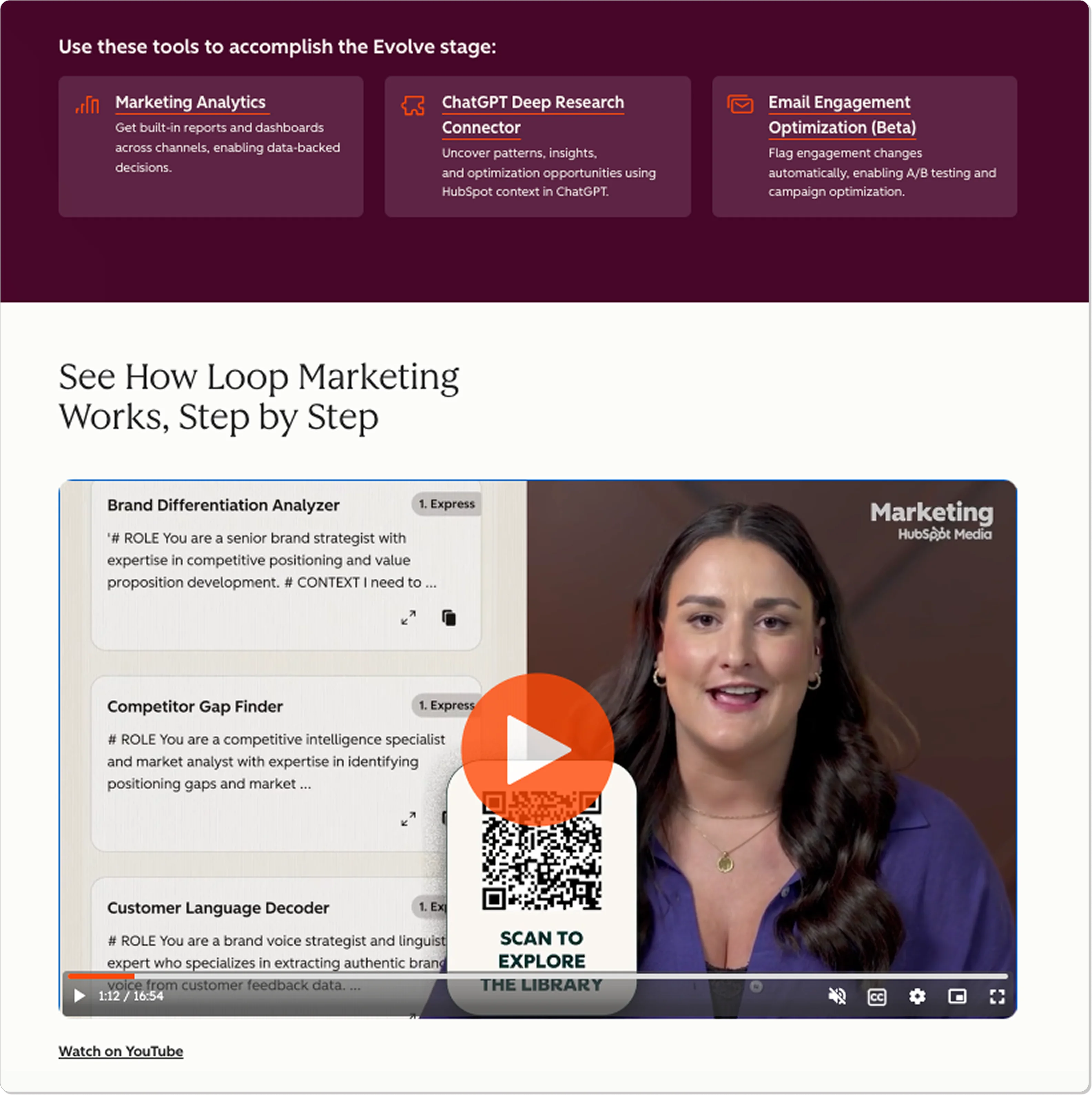
Strategy 2. Satellite
This strategy is for companies that already take SEO seriously and treat it as a core growth engine — not just a side experiment. After 1–2 years of consistent SEO work, most teams know exactly which keywords bring the most revenue. At that point, it can make sense to create a satellite site — a blog or media hosted on a separate domain.
There’re a few ways to create a satellite site, depending on your goals and resources.
- Traffic-generating satellite site. This is the classic SEO technique — you launch a separate site, publish valuable content tailored to high-intent search queries, and channel relevant traffic back to your main product via links, banners, and landing pages.
- Independent media brand. A more ambitious — and increasingly adopted — technique is to build a standalone media brand with its own editorial voice, distribution channels, and subscriber base. This way the satellite becomes not just a source of traffic but a long-term brand asset.
This approach takes more work and budget — but over the time it can generate stronger lead flow and higher-value conversions.
Let’s break down how to execute this strategy step-by-step — specifically launching a satellite as an independent media brand:
Step 1: Launch an independent media site under a separate domain. The satellite needs its own domain, editorial positioning, visual identity, and UX.
In the first year, there should be no visible ties to the core brand. Your goal is to build credibility and demonstrate an unbiased perspective.
In practice, your satellite site can be an expert-led blog, a niche media, or a thought-leadership platform powered by a group of subject matter experts.
Step 2: Consistently publish high-quality content. The media site should publish content that is both genuinely useful for readers and strategically aligned with SEO goals. Certain content categories are especially effective when published on an independent domain:
- Competitor reviews, comparisons, and guest-posts. Brands are reluctant to publish comparison content on their own blogs.
Publishing it on the satellite site allows you to capture competitors’ branded search traffic, open partnership conversations, and earn high-value backlinks (including ones from your competitors’ websites).
- Content that targets the highest-converting topics in your niche. Your main blog may not be able to cover every high-intent topic in your field. A satellite lets you capture more keywords and create more ranking opportunities in areas that directly drive demand and revenue.
- Content focused on the same high-value keywords as your core site. The goal isn’t to compete with your primary domain — it’s to increase your visibility in the search results. When both sites rank for the same queries, you take up more space and influence more of the user journey.
Step 3: Start promoting your product on the satellite site. Once your media gains traction — organic rankings, backlinks, returning readers, and industry recognition — that’s the right time to start introducing your product.
You can make subtle product mentions, link to relevant pages, or add banners.
Step 4: Redirect traffic or fully capture leads through the satellite. At this stage, you have two solid options: to send traffic to the main site through banners, CTAs, and contextual links, or to collect leads directly on the satellite — and forward these to sales.
Strategy 3. Acquiring a Ready-Made Niche Website
This approach is essentially a faster and more efficient alternative to launching a satellite. Instead of building a new platform from scratch, you simply purchase an existing blog or media in your niche — one that someone has already grown, developed, and introduced to your audience.
For SaaS brands this strategy isn’t very common — unless the company already holds a strong market position.
Still, there’re a few examples that show how buying a ready-made niche website can strengthen a brand and speed up results:
If you’re considering acquiring an existing site, there’re a few essential boxes that need to be checked first:
- Traffic is spread evenly across the site. If most visitors land on just one or two articles, there’s a risk. If these pages lose their rankings, your traffic will disappear with them. Ideally, no single page should drive more than 15% of your organic sessions.
- The site delivers value from day one. You should benefit from the acquired site immediately — whether that’s ranking for your target keywords, having an active email list, or a community you can nurture and convert.
- The backlink profile includes links you cannot easily replicate. Look for backlinks that would be expensive or difficult for you to acquire on your own — like DR 60+ backlinks, competitor mentions, or links from .gov/.edu domains.
- Domain age — preferably 5+ years. Older domains with 5+ years of history, consistent traffic, and a clean profile tend to earn more trust from search engines.
- The price stacks up. Compare what you’re paying to the cost of building and ranking a similar site from scratch.
Another crucial point to understand when evaluating a site: its current revenue doesn’t necessarily reflect its real value to your business. The owner may only be earning through ads or small product sales — that reflects their monetization model, not the full potential value.
If you use the same traffic to drive visitors into your sales process, the value of the site can increase many times over. So when you think about price, focus not on what the site earns today, but on the traffic potential it holds for your business.
Strategy 4. Partnering With Pages That Already Rank
This strategy helps you get relevant referral traffic quickly. This approach works best if you already know which keywords bring you leads and sales — and want more visibility for them.
The idea is to place your SaaS product on the websites that already rank at the top for your most important keywords.
Here’s how to put this strategy into action:
- Map the top-ranking pages across your keyword set. Build a list of the top 10 results for each query — these might be media sites, niche blogs, ratings, or industry roundups.
- Negotiate placement. The goal is to get your product featured on those pages, ideally with a dofollow link.
- Choose the right placement format. The format may vary depending on publication and the context of the page. It may be adding your product to a list, replacing a competitor, inserting a short product block, or using banner or pop-up placements.
- Align on pricing. Costs will vary based on traffic, placement type, and partnership model. Common pricing models include one-time fees, monthly or yearly recurring payments, or affiliate-based payments.
If you build a good relationship with the site owner — and the page in bringing you real leads — you can go a step further and boost that page to rank #1. For example, by directing backlinks to it from your other sites.
Strategy 5. Partner-Hosted Content to Rank for Your Target Keywords
Sometimes landing placement on the top-ranking sites just isn’t possible — for example, if they’re already promoting competing products or the terms they offer don’t make sense for you. In this case, there’s another way: reshape the SERPs in your favor through partner placements.
Here’s how the strategy works:
- You identify clusters of high-intent keywords — the ones that drive qualified leads and revenue.
- You publish articles targeting these keywords on partners’ websites: reseller sites, industry blogs, niche media, or even your clients’ sites that already speak to your audience.
The content format should differ from what you typically produce for your own blog. Each partner has their own tone, structure, and editorial style — and you should follow it. - Organic traffic grows faster. By leveraging the existing authority, history, and trust of partner domains, you gain faster organic visibility than building those rankings from zero on your own site.
This approach works, because both sides benefit from it:
- you create unique, expert content tailored to high-intent keywords
- your partner strengthens their authority and delivers value to their audience
- you establish a strong presence in the search results
Most companies already have a handful of potential or active partners who could support this strategy. When evaluating domains for publishing your content, make sure the following is true:
- the site already performs well in search
- you have built a trusted working relationship with site owner
- the partner has a real incentive to promote your product
- the partner is willing to provide you ongoing access to edit and update the content
That last point is crucial. You’re publishing high-value content on their domain with the goal of ranking and driving steady, qualified traffic. Getting to the top — and staying there — can take two or three years. During that time, the information in the article (pricing, product features, positioning, and more) will need undating. You need to be able to make those changes so the content stays accurate and continues to perform in search.
Strategy 6. Multilingual SEO
This strategy makes sense for companies ready to expand into new regions. Translating your website into multiple languages allows you to reach new audiences, boost local search rankings, and validate demand in other markets.
You don’t need to translate the whole site right away — you can take it step by step:
- Create a test page on your main domain. For example, if you’re targeting Germany, publish a page like site.com/de. Use it to gauge interest in your product, test sales channels (partners, resellers, paid ads), and validate product-market fit in that region.
- Move to a full localized version of your website. If the early signs are positive and the market shows strong potential, you can migrate to a subdomain (de.site.com) or even a separate domain (site.de). Or you can keep it in a subfolder (for example, site.com/de) as we recommended starting with.
Don’t overlook the technical SEO fundamentals: set up redirects between versions, and add hreflang tags so search engines know which language version to show to users in each country.
Where exactly should you build your international site — a country-level domain, a subdomain, or a subdirectory on your main domain? All three work, but each option has pros and cons, especially for SEO. The table below highlights the key differences:
A few more things to keep in mind with localization:
- Work with a native speaker to translate and review content. This helps you avoid awkward phrasing and adapt the content to cultural context.
- Show local pricing and contact details. Visitors should feel confident that you actually operate in their country. If you don’t have a local office yet, you can list partners' contacts instead.
- Set up your Google Business Profile and optimize for local search. Update your listing to reinforce to Google where you’re located and who your content serves.
Strategy 7. Building Your Own Aggregators and UGC Hubs
Not every keyword fits neatly into a blog format — some are too specific, too niche, or simply awkward to write about. Take “[platform] reviews”, for example. It matters for search, but it’s not the topic you can build an article around.
The idea of this strategy is to capture search demand by building your own aggregators or UGC hubs.
Let’s align on definitions first:
An aggregator is a site or a dedicated section that collects and organizes content from multiple sources in one place. A few examples are event calendars, product catalogues, course directories, or talent marketplaces.
A UGC hub (user-generated content) is a part of your site where content is created by users themselves — such as review pages, Q&A forums, template libraries, and similar formats.
Before investing in building an aggregator, make sure this model actually works for your niche by checking two things:
- Your aggregator’s key pages can be optimized for high-intent keywords. The purpose isn’t just data collection — it’s driving consistent organic traffic.
- Competitors in your niche are already driving traffic with this model. If successful aggregators are ranking well in your space, it’s a strong sign that the model works — and a chance to learn which content formats and UX patterns perform best.
An example of a UGC hub is the GeneratePress community. It’s built around one of the lightest and fastest WordPress themes. Users themselves create the content in the hub: asking questions, sharing solutions, posting code snippets, discussing settings, and exchanging SEO tips:
Don’t overlook moderation — especially for UGC hubs and any sections where users can submit content.
The content in aggregators and UGC hubs needs to stay accurate, up-to-date, and genuinely useful. In this case search engines are far more likely to treat these pages as trustworthy and give them more visibility in the SERPs.
💡 Expert Insight: Advanced SEO requires a strong in-house team.
The strategies listed in this section go beyond knowing general SEO principles or following a playbook. They require ongoing content creation and updates, adapting and maintaining your site, tracking ad placement performance, managing partnerships, and much more.
To make this work, you need a strong in-house team: SEO pros, writers and editors, analysts, link builders, product experts, designers, developers — and usually a few more roles depending on your setup.
With the right people working in sync — and the resources to support them — these strategies will unlock meaningful long-term results.
B2B SaaS Content Marketing vs. B2C
The main difference between B2B and B2C content marketing is how people think and make decisions.
In B2C, decisions are fast and emotional. A user discovers the product, instantly sees the value, and makes a purchase. Content here needs to catch attention quickly, through strong visuals, simple messages, and good storytelling.
B2B is a slower game. Decisions are usually made by several people, with discussions, comparisons, and approvals along the way. That’s why B2B content has to go deeper. It should be more rational, more detailed, and clearly show how the product creates value across the business.
Below, we’ll look at the key differences between B2B and B2C content marketing from an SEO perspective:
In B2B, content works best when it’s structured, practical, and goes a bit deeper. A few examples are step-by-step articles, case studies, webinars, and emails. Here, content is a trust-building tool that supports buyers throughout a long decision process.
In B2C content is more about quick impact. It should be easy to consume and emotionally engaging. Simple stories, strong visuals, and focus on fast solutions work well here, because people tend to make decisions much faster.
What Makes a SaaS Content Marketing Strategy Successful?
If you want to outrank big, trusted platforms like Capterra, G2, PCMag, Clutch, Software Advice, and other aggregators, simply publishing blog posts isn’t enough. A strong content strategy for SaaS companies is always a combination of things:
- Expert, search-relevant content. Content is the foundation of any SaaS SEO content strategy. It should match what people are actually searching for, sound expert but not overcomplicated, and gently move readers through the funnel.
- Internal and external links. Backlinks from authoritative websites help build trust with both readers and search engines. Internal linking matters just as much: it helps organize content, connect related topics, and strengthen your topical authority.
- E-E-A-T (Experience, Expertise, Authoritativeness, Trustworthiness). Search engines use this framework to assess content quality. In practice, it means that content should be based on real experience, supported by use cases, data, and reliable sources — not just theory.
- Technical optimization. Even the best content won’t drive traffic or leads if the site loads slowly or looks bad on mobile. Pay close attention to things like page speed, mobile optimization, indexing, clean URLs, site structure, and security.
- Strong brand. Users click on names they recognize and trust. A strong brand boosts SEO by improving click-through rates in search and increasing conversions.
The takeaway is easy: content marketing for SaaS companies works best as a system. When you content is useful, the brand feels credible, and the site is technically solid, you give yourself a real chance to outrank even the biggest players — and stay visible for keywords that matter.
The Team Behind a Successful SaaS Content Marketing Strategy
Behind every successful content marketing strategy for SaaS is a team that actually makes it work.
At the start you don’t need a big team. Two or three people are usually enough to cover BoFu content — things like product guides, reviews, and comparisons. But as your content growth strategy scales, the content team expands with it. Let’s break down who you typically need at each stage.
The initial team for BoFu content:
- An SEO specialist defines the strategy and content plan, prepares briefs for pages, optimizes content, and publishes articles.
- An in-house author writes product reviews, step-by-step guides, and articles that clearly show the value of the product.
- Product experts support the team with deep product knowledge and insights into competitors.
The initial team for MoFu and ToFu content:
- An SEO specialist defines the strategy and content plan, prepares briefs for pages, and optimizes content.
- A managing editor keeps the content consistent, manages the calendar, and makes sure articles go out regularly.
- A team of writers: in-house authors work on product-focused guides and educational content, while freelance writers contribute expert articles and content for publishing in industry media.
- A link builder works on outreach and backlinks to support rankings.
- Product experts stay involved to keep the content accurate and competitive.
- Designers and developers take care of visuals, layouts, and small blog improvements.
The success of a SaaS content marketing strategy depends heavily on the people behind it. Start with a lean team and add roles as you grow — and over time, connect can become a reliable source of traffic, qualified leads, and long-term customers.
Costs and Expected Results
To wrap up this comprehensive guide, let’s talk about two practical things: how much a content strategy for SaaS usually costs, and what results you can expect. These numbers are rough benchmarks: the real costs depend on your niche, competition level, and how big your keyword set is.
Rough cost estimates for a B2B SaaS content marketing strategy:
- One article — including writing, SEO optimization, publishing, project management, link building, and design — usually costs around $1,200.
- To cover the core keywords (about 100 articles, including BoFu content) you’ll need around $120,000.
- To cover 80% of search demand in the niche (300–400 articles across BoFu, MoFu, and ToFu), the budget is closer to $500,000.
Yes, that’s a serious investment, but this isn’t short-term marketing spend. This is long-term investment in organic growth, brand visibility, and market credibility.
What you can expect from an SEO-driven SaaS content marketing strategy:
- In the first year you’ll start seeing real organic traffic from search. In 3–4 years, the brand can realistically become a top 5–10 player in its category.
- When potential buyers reach the decision stage, your product will consistently show up on their shortlist as one of the leading solutions.
- You will control how your brand looks in search — its visibility, positioning, and reputation.
💡 Expert Insight: Content marketing and SEO usually pay off in 1.5–2 years — and after 3–4 years, they often become one of the main sales channels.
Content marketing and SEO don’t deliver instant wins — they require steady, consistent work. It takes about 1.5–2 years to build the foundation: create strong content, earn links, and start growing your brand’s authority in search.
But after 3–4 years, things start to click: organic traffic grows steadily, the brand earns real trust, and content investments begin to generate profit. At the same time, CAC goes down: the more content you have — the more organic traffic you get, the cheaper each new lead becomes compared to paid channels.
Takeaway
For a SaaS company, SEO and content marketing aren’t a quick fix. They’re a long-term system that lowers CAC, builds a predictable flow of traffic and leads, and gets more effective as the business scales.
Yes, a solid SaaS content strategy takes time, resources, and a strong in-house team. But when done right, it turns into one of the most powerful growth engines a SaaS company can build.
Comment from the team:
Last year, we ran 100+ strategy sessions with IT companies — and here’s what we noticed: most projects barely scratch the surface.
They cover only 20–30% of their core product keywords and jump straight to top-of-funnel content (Awareness, not Educational). This drives site traffic — but not leads.
It turns out in-house teams often just don’t have the bandwidth to build a complete semantic keyword set on their own (typically 500+ clusters) and thoroughly review each cluster for product relevance.
How to spot this? When it looks like you’ve covered all target keywords — try searching different phrases or use cases your clients are using to find a solution. If your site doesn’t appear in the top 10, and you don’t have a plan to cover these keywords — that’s a missed opportunity. To work effectively with the funnel, you need content covering every key search cluster your prospects type into Google before buying.
For a single IT product, that’s usually 10–20 clusters to track. If you have a platform with 4–5 products, that’s 100+ clusters — all unique lead-gen and sales opportunities, all value delivery paths.
Marketing a B2B SaaS or IT product? Want SEO to become a predictable, scalable growth channel — not just traffic? Let’s do this together. We’ll design a search-led content strategy and help your SaaS rank at the top of Google across the US, Canada, Europe, Latin America, Asia, and the Middle East.


